
• Recent Sermons

    Click for recent sermon audio.

  • Latest Tweets

  • Follow me on Twitter
  • Facebook

Warning! Warning! Warning!

I drive a 2000 Lincoln that is sometimes just too smart for its own good. Its little onboard computer gives me messages about air pressure and doors ajar, dings at me when I drive like an old man with my blinker on for too long, and in general, just takes every possible opportunity to annoy me. I am old school. I like blissful ignorance. Most of the time I just ignore the warnings.

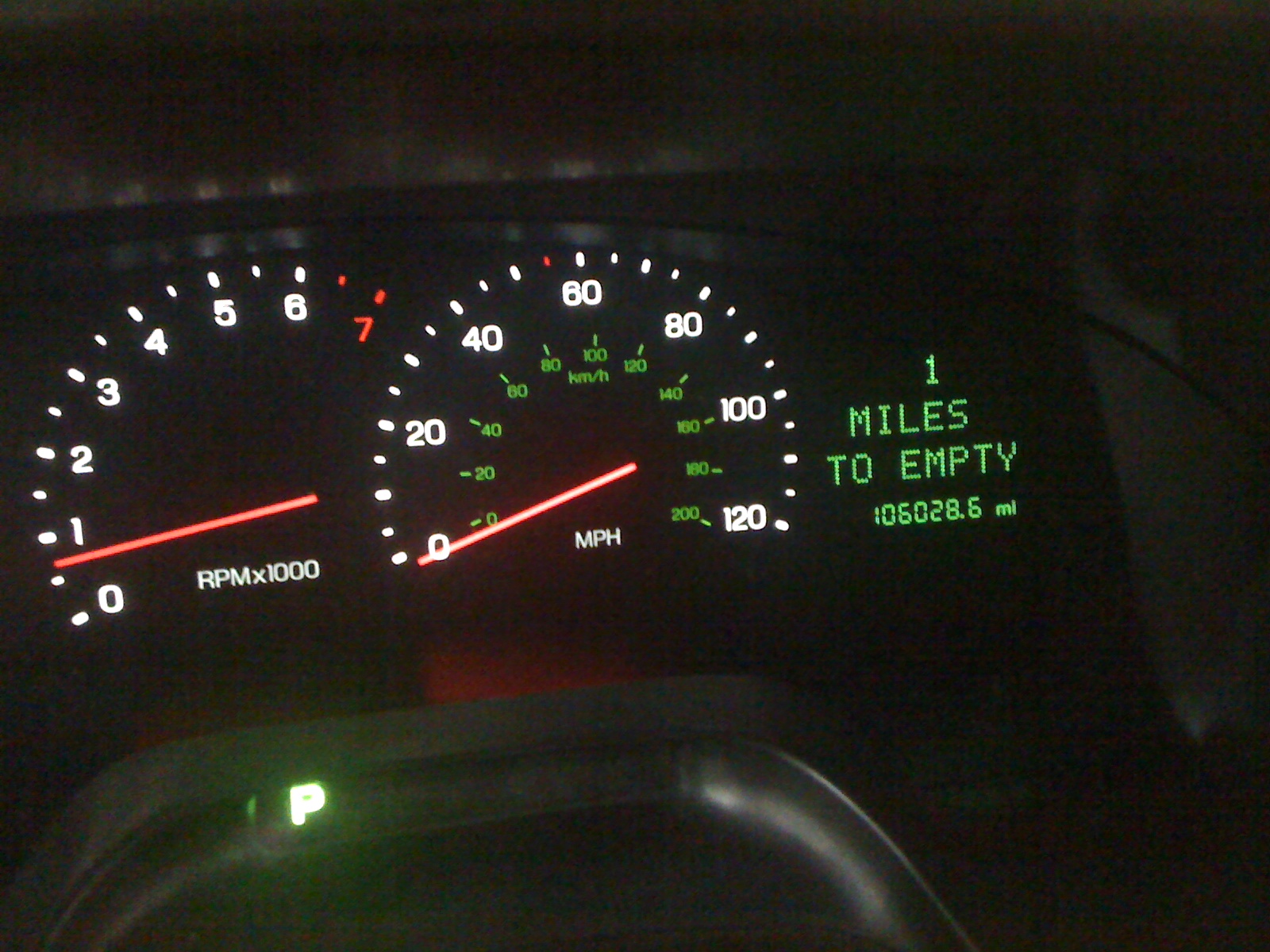
Wouldn’t it be nice if life and/or God gave us that kind of warning system? Let’s face it. Some of us just need it in writing. Take this picture for instance. Some signs just cannot be ignored. I was driving down I-81 when I got the polite notice, “low fuel.” Not liking to be nagged, I hit the reset button. Shortly thereafter, it began to buzz insistently. Finally, it began to count down the miles and finally, in fear, I heeded its warning. After all, I did not want to be stranded on the side of the interstate.

Most of us would heed that kind of auto warning, but few of us heed the warning signs in life. Yet, no one wants to be stranded on the side of the road in life because they ignored the warning signs. We just think that like the Energizer Bunny, we can keep going and going and going and never recharge. That is especially true during the month of December when we fill every possible moment with something to do, somewhere to go, and someone to see. It is no wonder when I greet people, the first thing they say is “I am tired” or they sigh and shrug their shoulders.

I am as guilty as the next guy, but allow me to mention a couple of Scriptural reminders that might help us both.

This is what the Sovereign Lord, the Holy One of Israel, says: “In repentance and rest is your salvation, in quietness and trust is your strength, but you would have none of it. (Isaiah 30:15)

You may also remember that after Mt. Carmel, Elijah wound up in a cave, cowering in fear of Jezebel. It was one of the most dramatic cases of spiritual burnout recorded in the Bible. God didn’t offer him any explanations or even much advice. He essentially just said sleep and eat. That is good advice for those of us who live life full tilt all the time. The next time your little warning light tells you you are about out of fuel, why not do the smart thing and refuel? Hmmmm….

Heritage vs Tradition

On the back page of my resume (which I know is too long, by the way) I have a list of things that I like and thinks I do not like. One of those pairings reads like this. “I like heritage, not tradition.”

Now, I know words are often “pregnant with meaning” and that words often conjure up different images for different people, so let me explain. In the world I work and relate to – a strange place I refer to as Church World – traditions can kill you. Baptist Church World in particular loves tradition. We have a joke that if you do something three times it becomes a tradition and can only be discontinued by a church vote.

In my mind, tradition is the practice of continuing to do things simply because we have always done those things, whether those things advance our current mission or not. The Baptist church I am serving as Transitional Pastor has some great traditions that have been a huge blessing to the community around them for many years and continue to be so. They have other traditions that were effective in the 1950’s, or 1960’s or even in the early 2000’s but they are no longer effective. Yet, because it is our norm, no one ever questions whether this tradition has outlived its usefulness. We just continue to do it because we have always done it. The challenge for us and any organization is discerning which is which.

Let me add one disclaimer. Traditions that have outlived their original purpose can be useful to an organization to remind them of past successes. Remember, the shepherd boy, David, looked back into his past to remind himself that God could use him to defeat Goliath. He said, “I have fought lions and I have fought bears so surely the Lord will deliver this giant into my hands.” Celebrating the past gave him courage for the future and that can be true in the life of an organization as well.

I am not fond of the word, tradition, because it comes with so much baggage. On the other hand, I do like the word, heritage. Every organization has a heritage that is worth celebrating. It is the personality or DNA of the organization. It is typically less about stuff we do and more about the defining moments in the life of an organization. Heritage is the story of the journey that makes up the foundation upon which future successes are built.

We do well to examine closely the usefulness of our traditions, keeping the ones that are still useful to our purpose and disposing of those that have outlived their usefulness. However, we must never discard our heritage. Who we have been in the past is a significant part of who we are today and who we will become in the future.

Fresh Eyes

I am now firmly entrenched in my assignment of the next 12-18 months, as transitional pastor of Antioch Baptist Church in Johnson City, Tennessee. Lori and I served this church as Minister of Youth and Education in the late 80’s and early 90’s. Our time there was significant in that it was there that my leadership and ministry philosophies were developed in the crucible of a growing but traditional church. The end of our tenure there was turbulent as the church went through several pastoral changes in quick succession after many years of stable leadership.

Since then, they have enjoyed one long pastorate and much upheaval in leadership, There numbers have pretty consistently declined over the last 15 years although that long pastorate led to some years of growth and some great ministry. They recently found themselves again without a pastor and even spent some months considering merging with another church as the Bible Study attendance dipped below 100 for the first time in decades.

There is a lot more to this story but I just needed to give you a little backdrop. As we settle into our part-time home near the church, we bring with us fresh eyes not only to look at how they are doing church but also to look at the community. It is an unusual “transitional community” The places nearest the church are still small family homes along Antioch Road, but within half a mile are condos and apartment complexes filled with college and graduate students along with young professionals. A half mile past the church is a growing subdivision of nice homes ranging from $150-350 thousand dollars. There is a city green way park and a mosque within a mile of the church on the same road.

I guess what I am saying is that the blue collar neighborhood I ministered in twenty years ago simply doesn’t exist anymore. The two most telling things our fresh eyes have seen involve some early morning walks from our home to the university campus. First, a majority of the people we meet as we walk are young with an inordinate number of Asians from among the grad students. There is nothing scientific about that observation, but we remember walking there many years ago and seeing young families with children playing in yards and on sidewalks and almost all of them were native to East Tennessee.

A second observation of who lives in the neighborhood now involves the supermarket on the corner. It used to be known as White’s, a hometown supermarket that billed itself as a local company and marketed itself in a folksy way. It has been replaced by Earth Fare, a supermarket for the ecologically concerned and the health minded. The presence of that store indicates the presence of a new kind of thinkers in the community. I am not sure of the exact demographics but stores like Earth Fare locate in an area for a reason.

Interestingly enough, White’s Supermarkets are now out of business. I pray Antioch Church learns a lesson from their failure and makes the changes necessary to again be a viable member of this neighborhood. We do not know yet what changes have to be made but for now, we are just trying to observe with fresh eyes before we get too accustomed to things around here.

The Christian Chaos Theory

I am no Sheldon Cooper (and truthfully have no idea if a theoretical physicist would even be concerned about the chaos theory) but I have my own little theory about chaos. Everytime I think I have all the balls I am juggling in the air and under control, someone tosses me a porcupine and in a panic, I let everything hit the ground. When that happens, if I remain close to God and listen intently, He is not only able but very willing to take the chaos that ensues and make it work for me rather than against me.

I was having coffee with a friend and we were whining together about how both of us seemed to have it all together three years ago and now both of us are putting one foot in front of the other, hoping there is something under our feet on the next step. Both of our lives have gone from very settled to totally chaotic and unpredictable, his as a result of outside events over which he had no control and mine as a result of my own stubbornness and foolishness. It really doesn’t matter who or what is to blame-we are both living in a chaotic time.The words of Psalm 37:23 came up as we encamped around our own little pity party. You may remember them.

“The steps of a righteous man are ordered by the Lord….”

My friend, Jerry, told me something a professor told him in seminary. This professor assured Jerry and his fellow students that this verse did not mean God controls us like robots and tells us which step to take, but that the word “ordered” there is more akin to “bringing to order.” In other words, God takes the chaotic messes we make of our lives and brings them to order.

I am “exhibit a” in this Theory of Christian Chaos. I would never have left my comforatble life and chosen the path of the last 18 months in my life. I would never have exchanged the comfort of a role as Senior Pastor of a large and growing church for the uncertain life of missions, consulting, and transitional pastoring. I also do not believe God forced me or made me enter into this chaos. It was caused by my own choices. However, I am sure of this. Only God could take the mess and make it a message, in the words of Joyce Meyer.

So, that is my theory of Christian chaos. God takes the chaos of our lives and brings it to order when we remain in Him and He remains in us. Does that ring true in your own experiences?

I Am Not a Fan

You should meet my new friend, Brin. She is in Kindergarten and I met her at lunch with her Papa and Gran last Sunday. She was instantly special to me for a lot of reasons, not the least of which is that I had the privilege of being her mother’s youth pastor during another lifetime. She was engaging and smart and not the least bit intimidated by an adult, even if he was the visiting pastor.

Brin taught me a new phrase, one I am sure she learned from Mom and Dad. Our menu was more pastor-friendly than it was toward her and her younger sister and baby brother. They were very cooperative and ate what was put on their plate but you could tell they would rather have had pizza, which Brin politely told me was her favorite food.

When asked if she liked the chicken casserole, she said, “I am not a fan.” She went on to explain that “I am not a fan” means that she likes it but it is not her favorite thing. Since then, whenever something happens that I do not like, I have thought to myself, “I am not a fan.” In fact, there are a lot of things lately that make me say “I am not a fan.” Here is a partial list of those that have crossed my path since I met Brin.

  • Negative political commercials
  • Bad football officiating
  • Selfish drivers
  • Gossiping Christians
  • Asparagus

Don’t you just love the politeness of that phrase? I am not a fan! What is it that makes you want to say, “I am not a fan.”

To Give or Not to Give?

     This is not a very well planned article. In fact, it is pretty raw and in the end, it is just a question. What is the right thing to do? Should every Christ follower give to every homeless person that asks? I should know the answer to that at my age, but I just don’t.
      Here is the deal. Yesterday morning in Nashville, I purchased a newspaper from a homeless vendor for the first time. It is a great system and I think it is a good idea but I almost never have cash on me and when I am in Nashville and do have cash, I am not in the right position to do this. Yesterday, I was in the right place at the right time and felt pretty good about the choice.

     Today, while exiting the interstate, there was a homeless man “flying a sign,” in the vernacular of the homeless. It just said, “Homeless and hungry. Please help.” The problem is I had cash in my pocket and I was close enough to do something for him, though it would have been inconvenient for me and the people behind me on the ramp. Where he was standing was both dangerous and illegal. I thought about it and for a few seconds, debated what to do. By the time, I decided, it was too late. I missed my chance.
     Here are some of the thoughts that flooded my mind in that brief time.

  • “That could be me. After all, this time last year, I was completely unemployed.”
  • “I don’t have much money on me and it really needs to last me through the weekend.”
  • “That could be one of those “angels unaware” the Bible speaks of.”
  • “People behind me are going to get impatient if I block traffic long enough to help him.”
  • “I am so selfish.”
  • “This is not going to stand the ‘Matthew 25’ test.”
  • “He doesn’t need to be doing this right here.”
  • “I helped a guy yesterday. Doesn’t that count?”
  • “How discouraging must it be to get turned down that many times?”

     In the end, none of that matters. I missed my chance. Delaying the decision made the decision. I know all the cliches and all the Bible verses, but in the end, I still wonder. What is the right thing to do? Even worse, maybe I already know the answer and just don’t want to admit it.
     What do you think? What is our responsibility to the beggar in this horrible economy?

Where Did that Come From?

     Have you ever opened your mouth and something came out that surprised even you? I think most of us are surprised at some point when something escapes our lips during times of extreme pressure.  We like to believe that we are better than we are. It is the curse of man and sin. When the pressure is turned up, though, the real me comes out.
     I was telling the Antioch Church yesterday about a time when I accidentally ran a red light through a MAJOR intersection when cars were flying in every direction. I was just exiting the Dunkin Donuts and savoring my large decaf with one cream and two splenda and my toasted blueberry bagel. Perhaps, I was a bit distracted. By the time I realized what happened, it was too late. I had to go. So with great fear and trepidation, I floored it and made it safely through. Horns were blowing, tires were squealing, people were yelling, and I was even saluted by several folks, though not in a form that was particularly flattering.
     Unfortunately, when I realized what I had done, a word came out of my mouth that I do not remember ever having used as an adult. (And NO, I will not tell you what it was.) It caused me to ask the question, “Where did that come from?” Since I told that story, several have shared similar stories. A friend whose parents are enduring a nasty divorce said “I do not know where that came from.” A couple whose children are dealing with issues of their own making are second guessing their own motives in giving advice, saying “I am ashamed of what I am thinking. I thought I was better than that.” A person who is at odds with an old friend said I don’t like what I am feeling and I do not know where it came from.
     The purpose of this is not to preach. After all, we know the sin nature of man, and the stress of life and our own pride, etc. The purpose here is just to say, “embrace it.” Count it all joy. If the pressure had not come and you had not reacted the way you did, you would be tiptoeing merrily along through the tulips self-deluded into believing you were okay. You would never have known the depth of the depravity of your own heart and would never have had the opportunity to confess it and renounce it and move on. Because you now know, you get to work on it and continue to be molded into the image of Christ.
     Proverbs 28:13 says that “He who conceals his sin does not prosper,” even when we are not consciously concealing it. It is important to know it and confess it and renounce it. If you had asked me prior to that event, I would have said that although I have lots of vices, foul language is not one of them. Now, I know better and have the opportunity to let the Father change that about me.
     What about you? Got a story you can share about a time when you asked “Where did that come from?”

Change

“Change only occurs when the pain of staying the same outweighs the pain of change.” – Unknown

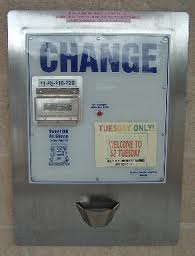
“I put a dollar in one of those change machines and nothing changed.” – George Carlin

I spend much of my time today doing the dreaded “c” word – consulting. I talk with pastors and leaders of faith based nonprofits about thinking forward. Today, I spent the better part of two hours with a friend and client who has just come to realize a couple of things. He figured out that after two years of pushing for change, nothing has changed. He also made the observation that the status quo was just not painful enough yet to demand change.
I have been there. Oh, for sure, I have been there as the leader of change, but I am talking about as the one who did not want to change. I lost a lot of weight last year because the pain of staying the same was greater than the pain of change. I don’t walk two miles every day because I like to walk. In fact, I hate to walk, but the pain of not being able to walk and ride roller coasters with my kids and wife was greater than the daily pain of walking. I didn’t want to admit I was battling depression but the pain of trying to overcome it on my own became so great that I saw a doctor, a counselor, and a support group. I tried to do it the easy way, like Carlin. I wanted to just put some money in and get a change. It didn’t work. I had to do some things differently if  I was going to have a better life. Heck, I had to do some things differently if I was going to live.
Yet, organizations and churches rarely get to that threshold of pain in time to turn the ship around. From your current position, what can you do to help your organization embrace change in a healthy process? Are you willing to do the hard work of leading change?

Lessons from an Unemployed Professional Christian

That is my tongue in cheek description of life as a pastor. I used to tell my people that I was paid to be good while they had to be good for nothing. Nearly a year and a half ago, I found myself unemployed for the first time in my adult life and with no marketable skills other than in church world, or so I thought. Now, I am still what our government euphemistically calls “under-employed” but my house has not been repossessed and we have not skipped a meal. It is just the grace of God and what follows is neither a “how-to” list for surviving unemployment nor an expert analysis of the situation. It is just some lessons I have learned along the way. Maybe there is something in here that will help you.

  1. Treat every day like you have a job. I get up and get dressed and go out and try to make something happen every day. I am convinced the greatest danger to mental health is not having a reason to get up in the morning. Often, the reasons I made for myself were a stretch, but at least a deadline, a meeting, or a phone call required me to have a plan for the day.
  2. Similarly, you should consider finding your place (not necessarily your job) your full time job. I know lots of people who spend 30 minutes a day looking at the online or newspaper want ads and submitting resumes and the rest of the day feeling sorry for themselves or playing video games or both. Networking with people in the fields in which you are interested and keeping in touch with your contacts is a significant purpose for each day.
  3. Build an inventory. I realized quickly that I know a lot of things and have a lot of experiences that can help some people and create some revenue streams. It didn’t take me long to realize that my next step might not be to one employer but to have several little things that create revenue streams. During one of those “work days” at the coffee shop, I brainstormed a list of things I could do and things I know how to do and things I at which I am really good. This step also caused me to get creative about delivery systems for that inventory of accumulated knowledge and experience…which leads to the next lesson.
  4. 

    Me learning something about concrete work.


  5. Learn something. Prior to now, I have been a bit of a tech junkie, tinkering with social networking, viral marketing, websites, blogs, etc. However, I really didn’t know HOW to do any of those. I am still not completely sure but as I have needed to know something, I have tried to learn it rather than outsource it. Not only is it helping me to market myself, but these are skills that make me look better in the market. (While on a recent trip, I learned how to mix and pour concrete, a skill that could come in handy in the future.)
  6. Add value. I decided early on that ministry was for me a calling and not a profession and even though no one was paying me to do it, serving God by serving others was still how I would live my life. I have used my skills and abundance of free time to help several other ministries during this time, coaching pastors, developing a missions website, raising funds for a friend’s non-profit, etc. I did not do those things for profit but now that I look back, I did profit. Every time I invested in someone else, that seed grew, either as a new skill developed, or a paying gig evolved from the contact, or I met someone through that contact that can help me along the path. Adding value to others as a way of life always pays off eventually.

This is not an exhaustive list and I may add more later, but it gets us started. What have you learned that you can add to the discussion?

Seasons


I was walking while it was still dark this morning and thinking when my AADDD (Adult Attention Deficit Disorder Deliberately) kicked in. Here is the series of thoughts that went through my mind in the next 20 seconds:

  • I missed the summer season this year (Lori and I were in Africa below the equator where it was winter for the past two months.)
  • I like summer.
  • I like all the seasons.
  • God must have liked seasons because he talked about them.
  • What I really like is the change of seasons, when summer turns to fall, winter turns to spring, etc.
Sunrise over the Masai Mara

I’ve been in a change of season in my life lately. One year ago, coming off of depression, failure, resignation, and insomnia, I did not see how I could ever face life again, much less return to full time ministry. As I write this, I have just returned from two fruitful months in Malawi and Kenya and I am sitting in a hotel room in Florence, Alabama, preparing to speak to a church leadership team for the weekend.

It didn’t happen easily and the decision to reenter public ministry was not made lightly, but here I am. The difficult months from January, 2009-July, 2010, seem like a dream at times, but the lessons learned in that season and in the change of seasons are lessons I never want to forget. (If you want to know more about my journey, visit my site at http://www.petetackett.com.) Without getting too wordy, let me just mention some things I have learned or re-learned about seasons that may be encouraging to you.

1. Seasons are just that – they are seasonal. This too shall pass. Sometimes, surviving is more important than succeeding. “There is a time for everything and a season for every activity under heaven.” (Ecclesiastes 3:1)
2. Seasons are ultimately controlled by a loving God who has good plans for me. No, I do not believe that God orchestrates bad events in our lives. Truthfully, we are broken, sinful people living in a broken and sinful world and the result of that is always going to be brokenness. Yet, God takes those horrible times and events in our lives and if we allow Him, uses them to shape and mold us for new and expanded usefulness in the next season. The wisest man who ever lived said, “He (God) has made everything beautiful in its time.” (Ecclesiastes 3:11)


Lori and I at Sarova Mara in Kenya

 3. Some seasons are designed to remind us of the things we already know and to remind us of the things that are important. Two of those reminders to me have been most significant. First, the grace and mercy of God is bigger than I knew and His mercies really are new every morning. Second, there is nothing in this world, NOTHING, more important than my family and friends. As I enter this new season, I am most grateful for the love and devotion of Lori, Sarah, and Jonathan. If I had never preached again, to be loved by God and those three wonderful people would be enough.

I do love the change of seasons and I am grateful for the opportunities God is giving me in this next season, but may I be honest with you? As hard as it has been, I would not forgo the embarassment, frustration, and pain of the past 16 months if it meant I also had to miss the lessons that led to some very positive changes in my life and ministry. I suppose, I am even grateful for the season that was because it gives greater meaning to this change of season and the hope of the new season.

 What are some lessons you have learned about seasons of life?