• Recent Sermons

    Click for recent sermon audio.

  • Latest Tweets

  • Follow me on Twitter
  • Facebook

Plagiarism vs Research

     With the advent of the digital age, what has long been a “hush-hush” topic of pastor world has come into the forefront-the issue of pastors taking other pastor’s sermons and speaking it as though God gave it to them fresh for that moment. With the onset of the internet, there are more sources and greater availability of many sermons, but this is not a new issue. From the time I began preaching at a very young age, pastors were buying books of outlines and subscribing to famous preacher’s newsletters to get ideas.

     One of the funnier stories among preachers involves R. G. Lee, the longtime pastor of Bellevue Church in Memphis, Tennessee. One of his most famous sermons was called “Payday Someday.” It is told that he and his wife attended a small church while on vacation and the young preacher preached his sermon. He was grumbling about it as they returned to their hotel room and his wife reportedly responded, “you are just upset because he did it better than you.”

     I have two thoughts about plagiarism. First, to use someone else’s material without crediting them is always wrong. Second, for God to give someone a great lesson for his people and not allow anyone else to use it seems a lot like God only allowing Bill Gaither to sing “Because He Lives” since he was the one who wrote it.

     Here is a link to an article from www.sermoncentral.com that came to me this morning. Sermon Central is a site used by many pastors to research and share sermons. I appreciate the way they address an issue that hits them so close to home. Click on the picture to view the article.

The Tennessean on Denominations

The Nashville Tennessean published this article on January 1, documenting some telling news about people’s loyalty to denominations.

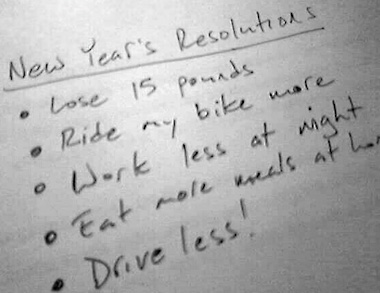
My New Year’s Revolution

     On Sunday, January 2, I will do what I have done every year for the past several years – I will do my best to cast a God-given vision for the new year to the people I am privileged to serve in ministry. This year’s title is “A New Year’s Revolution,” a play on the word, resolution, with an acknowledgement that we rarely keep resolutions when we make them. Getting ready for that sermon causes me to think about what I would like to accomplish in 2011. Here is my current list:

1. Develop better habits. That is a carryover from my 2010 list. I did better in 2010, lost some weight, walked almost every day, got more consistent in my reading, etc. Then came December. I haven’t done so well this month with all the travel, snow, parties, etc., so I am going to start over in January.
2. Manage my social networking and online ministry better instead of letting it manage me. I know it is a valuable tool, but I can let it become the tail that wags the dog.
3. As a corollary, I am going to streamline my blogging stuff. I started out learning to blog at http://www.playingthesecondhalf.blogspot.com/. Then, I launched back into ministry and used wordpress to create http://www.petetackett.com/. Then I took on the transitional pastorate at a church in Johnson City, Tennessee, and developed a blog/website for them at http://www.antiochbcjc.org/. (For the record, I did not choose the name, but that is another story.) I would like to migrate my personal blog onto one of the other pages and only use wordpress in the new year.
4. I am going to clean up my friends list on twitter and facebook and empower some other people to update the church pages when needed.
5. I am going to continue to resist Kindle and ipad and all their cousins and just keep reading hard copies of books because I love the feel of a book and the freedom to mark it up.
6. I am going to pray more than I talk about praying.
7. I am going to continue to enjoy spending more time with Lori in this new season of having adult children and I am going to work really hard at being a better parent of adult children and let them be adults instead of treating them like kids.
8. I am going to unsubscribe to almost everyone on my google reader list and start over. I am going to be more proactive about sharing the good stuff I find there with people I know that need it.

     What about you? Do you have a list? What would you add to mine?

I Wish I Had Said That!

The following is an article by a guy who blogs frequently about church culture and the way we relate to the world. This article from December 15 reminds us of the reason for Christmas. If you would like to subscribe to his blog, go to http://www.stuffchristianslike.net/.

The “R” word

by Jon Acuff

The easiest way for a store to make my wife mad is to have a complicated return policy. She refuses to shop at Forever 21 for this very reason. Their return policy is so complicated that the cashiers will often read it to you when you’re making a purchase, kind of like a cop reading you Miranda Rights. “By purchasing this melon colored scarf you realize that should you ever take it out of the bag and merely make eye contact with it, that will forever be held against you in the court of no returns.”

This type of frustration often manifests itself at Target. There have been a number of times when they’ve refused to make some return easy over an amount in question as small as a few dollars. The great irony is that Target will spend tens of millions of dollars trying to get people into their stores via advertising and then argue over $1.50 once they’re at the returns counter. If they paused for a second, they would jump at the chance to pay a $1.50 to get a customer who over the course of her life will spend thousands of dollars in their store.

That’s why I love places like LL Bean. You can bring a canoe on fire into their store and they’ll take it back. Same with Wal-mart, a store we spend a considerable amount of time in. Although the Wal-mart in Franklin is situated in kind of a pit of despair parking lot, we still go pretty regularly. A few years ago, during one of our trips there, I saw something interesting that I’ve written about before. It was a powerful action that in a strange way reminded me of Christmas this year.

One afternoon, in the middle of an ordinary Saturday, the loudspeaker buzzed to life and a less than calm voice said, “All employees, we’ve got a Code Adam.”

In seconds, every employee sprinted to the front doors. A few went outside to scan the parking lot, the others formed a wall blocking the exits. It was like an anthill had been kicked over.

Why?

Because a Code Adam means that a child is missing.

I imagine that most times, the child is found quickly and all is returned to right. That’s what happened when I saw my first Code Adam. But for a few minutes, nothing in the store mattered as much as finding that missing kid. The world of commerce and price tags and sales figures stopped dead as they tried to locate a lost child.

And I think that’s how God is too.

When I am lost. When like the prodigal son, I stumble from the father’s grasp and gaze, I don’t think He cries out “look at Jon sinning again! Look at him failing me again!” I think God cries, “Code Jon! Code Jon!”

And then He rushes outside, hoping to intercept me before I get in the wrong car, desperate to keep me from making the type of decision that is going to hurt me. Because He loves me. I am His delight. He longs, not likes, but longs to show us compassion.

And we are the reason for the greatest Code Adam moment in the history of all mankind, Christmas.

In the tinsel and the lights and the balsam flavored candles we forget that sometimes. It is a beautiful season. It is full of merriment and cheer, but at its heart, Christmas is a rescue.

From the safety and security of heaven, stormed Jesus. From the contentment and perfection of God rushed the Lord. Why? Because God had declared a Code Adam. A Code Jon. A Code Christy. A Code Stacy. A Code Chad. A Code Chris. A Code You.

When we were lost, He did more than just lock a store down. When we were beyond all hope he did more than sprint to the parking lot. He sent his son to the cross for us, to rescue us. And, he speaks this message in a thousand ways every day. He would move the mountains and the cosmos if it meant we came home safe. If it meant we returned to the father and he could stop saying, “Code Adam, Code Adam.”

That’s what I hope we all remember this Christmas.

The reason for the season is a rescue.

If you wanna be the man….

When I was much younger, there was a professional wrestler (yes, I know it’s fake) named Ric Flair who was as famous for his mouth as for his wrestling moves. His signature rants often ended in an emphatic “Woo!” One of the recurring themes of his infamous tirades was the assertion that “if you wanna be the man, you gotta beat the man!,” insinuating that if you wanted to be the top dog, you had to go through him. When churches and organizations go through transitions and have to proactively change things in an accelerated way rather than just evolving, there is a need to develop some “rants” of our own, or some phrases that help us define what we are trying to do and why we are trying to do it. One of those that rolls around in my head all the time says this. “If you wanna be a church of 300, you have to act like a church of 300.” (Feel free to put a number in the rant that works for your organization.) Like Kevin Costner in Field of Dreams, it is a philosophy that says “if you build it, they will come.”

Realistically, small and declining churches and non-profits tend to stay small and continue to decline because their structure, DNA, and culture are designed to maintain or decline. They never purposefully decided to stay small or decline but they allowed certain processes to evolve and over the years, institutionalized cultural norms that hinder growth and vitality. The problem is that it happens so gradually that if feels normal and we just don’t understand why we continue to sink.

I serve a church currently as transitional pastor that is having to learn that language. In a 20 year period of plateau and decline, they have adapted and grown accustomed to some processes and procedures that helped them survive. Unfortunately, those survival techniques rarely work if you want to get beyond survival to thriving.

The good news is our organization is that there is a pervasive sense of optimism among our membership right now and a desire to move forward and again be a part of God’s Kingdom advance here in our city. I think there is potential for them to grow from where they are to be a church of 300+ without having to build or relocate, both very unrealistic expectations for them right now. So, we are spending a lot of our time rebuilding ministry teams and infrastructure that will attract and care adequately for 300. After all, if you are going to be a church of 300, you have to act like a church of 300.

What are some of the processes you have discovered in your organizations over the years that have hindered the advance of the group vision?

Warning! Warning! Warning!

I drive a 2000 Lincoln that is sometimes just too smart for its own good. Its little onboard computer gives me messages about air pressure and doors ajar, dings at me when I drive like an old man with my blinker on for too long, and in general, just takes every possible opportunity to annoy me. I am old school. I like blissful ignorance. Most of the time I just ignore the warnings.

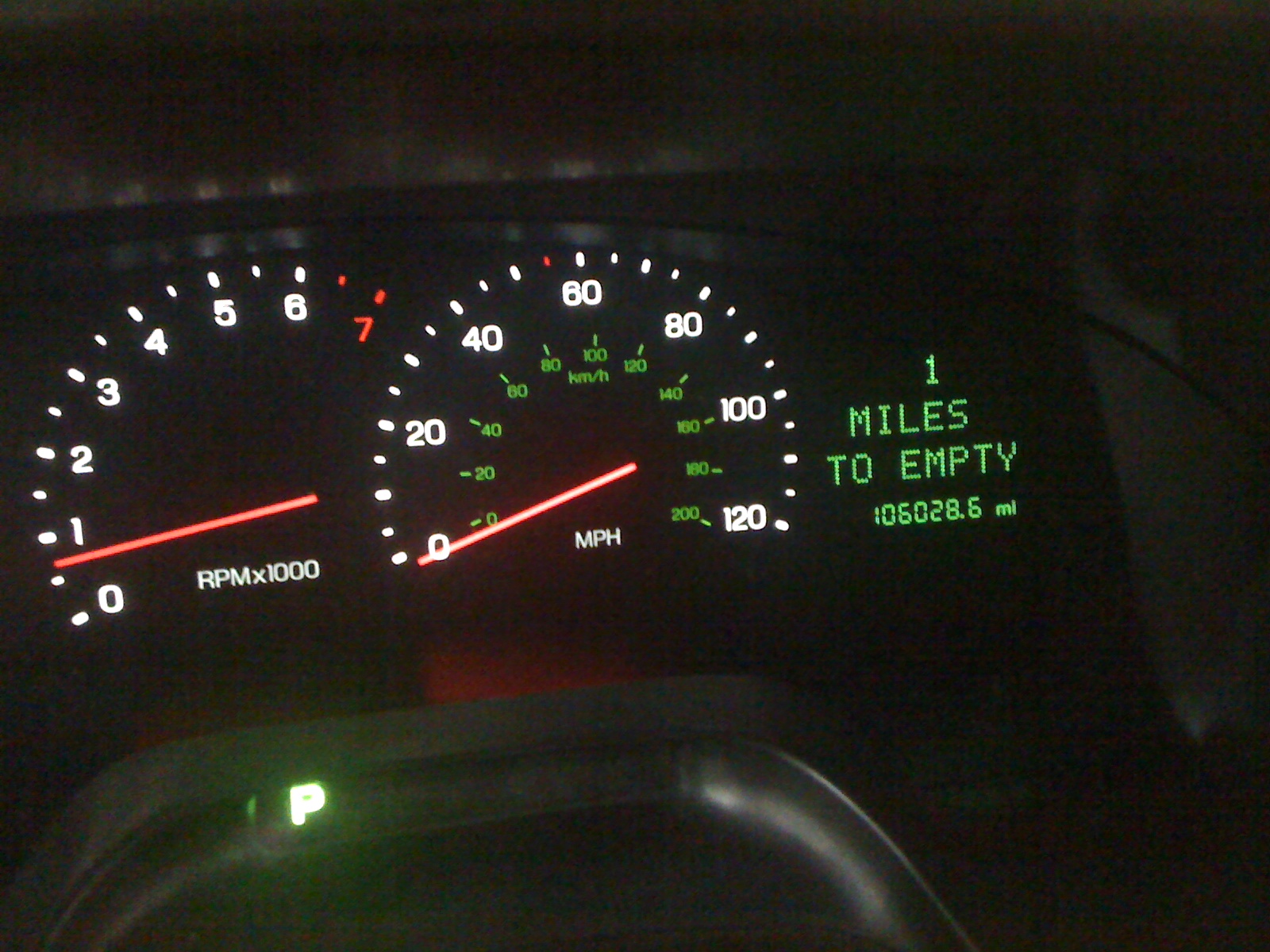
Wouldn’t it be nice if life and/or God gave us that kind of warning system? Let’s face it. Some of us just need it in writing. Take this picture for instance. Some signs just cannot be ignored. I was driving down I-81 when I got the polite notice, “low fuel.” Not liking to be nagged, I hit the reset button. Shortly thereafter, it began to buzz insistently. Finally, it began to count down the miles and finally, in fear, I heeded its warning. After all, I did not want to be stranded on the side of the interstate.

Most of us would heed that kind of auto warning, but few of us heed the warning signs in life. Yet, no one wants to be stranded on the side of the road in life because they ignored the warning signs. We just think that like the Energizer Bunny, we can keep going and going and going and never recharge. That is especially true during the month of December when we fill every possible moment with something to do, somewhere to go, and someone to see. It is no wonder when I greet people, the first thing they say is “I am tired” or they sigh and shrug their shoulders.

I am as guilty as the next guy, but allow me to mention a couple of Scriptural reminders that might help us both.

This is what the Sovereign Lord, the Holy One of Israel, says: “In repentance and rest is your salvation, in quietness and trust is your strength, but you would have none of it. (Isaiah 30:15)

You may also remember that after Mt. Carmel, Elijah wound up in a cave, cowering in fear of Jezebel. It was one of the most dramatic cases of spiritual burnout recorded in the Bible. God didn’t offer him any explanations or even much advice. He essentially just said sleep and eat. That is good advice for those of us who live life full tilt all the time. The next time your little warning light tells you you are about out of fuel, why not do the smart thing and refuel? Hmmmm….

Heritage vs Tradition

On the back page of my resume (which I know is too long, by the way) I have a list of things that I like and thinks I do not like. One of those pairings reads like this. “I like heritage, not tradition.”

Now, I know words are often “pregnant with meaning” and that words often conjure up different images for different people, so let me explain. In the world I work and relate to – a strange place I refer to as Church World – traditions can kill you. Baptist Church World in particular loves tradition. We have a joke that if you do something three times it becomes a tradition and can only be discontinued by a church vote.

In my mind, tradition is the practice of continuing to do things simply because we have always done those things, whether those things advance our current mission or not. The Baptist church I am serving as Transitional Pastor has some great traditions that have been a huge blessing to the community around them for many years and continue to be so. They have other traditions that were effective in the 1950’s, or 1960’s or even in the early 2000’s but they are no longer effective. Yet, because it is our norm, no one ever questions whether this tradition has outlived its usefulness. We just continue to do it because we have always done it. The challenge for us and any organization is discerning which is which.

Let me add one disclaimer. Traditions that have outlived their original purpose can be useful to an organization to remind them of past successes. Remember, the shepherd boy, David, looked back into his past to remind himself that God could use him to defeat Goliath. He said, “I have fought lions and I have fought bears so surely the Lord will deliver this giant into my hands.” Celebrating the past gave him courage for the future and that can be true in the life of an organization as well.

I am not fond of the word, tradition, because it comes with so much baggage. On the other hand, I do like the word, heritage. Every organization has a heritage that is worth celebrating. It is the personality or DNA of the organization. It is typically less about stuff we do and more about the defining moments in the life of an organization. Heritage is the story of the journey that makes up the foundation upon which future successes are built.

We do well to examine closely the usefulness of our traditions, keeping the ones that are still useful to our purpose and disposing of those that have outlived their usefulness. However, we must never discard our heritage. Who we have been in the past is a significant part of who we are today and who we will become in the future.

Fresh Eyes

I am now firmly entrenched in my assignment of the next 12-18 months, as transitional pastor of Antioch Baptist Church in Johnson City, Tennessee. Lori and I served this church as Minister of Youth and Education in the late 80’s and early 90’s. Our time there was significant in that it was there that my leadership and ministry philosophies were developed in the crucible of a growing but traditional church. The end of our tenure there was turbulent as the church went through several pastoral changes in quick succession after many years of stable leadership.

Since then, they have enjoyed one long pastorate and much upheaval in leadership, There numbers have pretty consistently declined over the last 15 years although that long pastorate led to some years of growth and some great ministry. They recently found themselves again without a pastor and even spent some months considering merging with another church as the Bible Study attendance dipped below 100 for the first time in decades.

There is a lot more to this story but I just needed to give you a little backdrop. As we settle into our part-time home near the church, we bring with us fresh eyes not only to look at how they are doing church but also to look at the community. It is an unusual “transitional community” The places nearest the church are still small family homes along Antioch Road, but within half a mile are condos and apartment complexes filled with college and graduate students along with young professionals. A half mile past the church is a growing subdivision of nice homes ranging from $150-350 thousand dollars. There is a city green way park and a mosque within a mile of the church on the same road.

I guess what I am saying is that the blue collar neighborhood I ministered in twenty years ago simply doesn’t exist anymore. The two most telling things our fresh eyes have seen involve some early morning walks from our home to the university campus. First, a majority of the people we meet as we walk are young with an inordinate number of Asians from among the grad students. There is nothing scientific about that observation, but we remember walking there many years ago and seeing young families with children playing in yards and on sidewalks and almost all of them were native to East Tennessee.

A second observation of who lives in the neighborhood now involves the supermarket on the corner. It used to be known as White’s, a hometown supermarket that billed itself as a local company and marketed itself in a folksy way. It has been replaced by Earth Fare, a supermarket for the ecologically concerned and the health minded. The presence of that store indicates the presence of a new kind of thinkers in the community. I am not sure of the exact demographics but stores like Earth Fare locate in an area for a reason.

Interestingly enough, White’s Supermarkets are now out of business. I pray Antioch Church learns a lesson from their failure and makes the changes necessary to again be a viable member of this neighborhood. We do not know yet what changes have to be made but for now, we are just trying to observe with fresh eyes before we get too accustomed to things around here.

The Christian Chaos Theory

I am no Sheldon Cooper (and truthfully have no idea if a theoretical physicist would even be concerned about the chaos theory) but I have my own little theory about chaos. Everytime I think I have all the balls I am juggling in the air and under control, someone tosses me a porcupine and in a panic, I let everything hit the ground. When that happens, if I remain close to God and listen intently, He is not only able but very willing to take the chaos that ensues and make it work for me rather than against me.

I was having coffee with a friend and we were whining together about how both of us seemed to have it all together three years ago and now both of us are putting one foot in front of the other, hoping there is something under our feet on the next step. Both of our lives have gone from very settled to totally chaotic and unpredictable, his as a result of outside events over which he had no control and mine as a result of my own stubbornness and foolishness. It really doesn’t matter who or what is to blame-we are both living in a chaotic time.The words of Psalm 37:23 came up as we encamped around our own little pity party. You may remember them.

“The steps of a righteous man are ordered by the Lord….”

My friend, Jerry, told me something a professor told him in seminary. This professor assured Jerry and his fellow students that this verse did not mean God controls us like robots and tells us which step to take, but that the word “ordered” there is more akin to “bringing to order.” In other words, God takes the chaotic messes we make of our lives and brings them to order.

I am “exhibit a” in this Theory of Christian Chaos. I would never have left my comforatble life and chosen the path of the last 18 months in my life. I would never have exchanged the comfort of a role as Senior Pastor of a large and growing church for the uncertain life of missions, consulting, and transitional pastoring. I also do not believe God forced me or made me enter into this chaos. It was caused by my own choices. However, I am sure of this. Only God could take the mess and make it a message, in the words of Joyce Meyer.

So, that is my theory of Christian chaos. God takes the chaos of our lives and brings it to order when we remain in Him and He remains in us. Does that ring true in your own experiences?

I Am Not a Fan

You should meet my new friend, Brin. She is in Kindergarten and I met her at lunch with her Papa and Gran last Sunday. She was instantly special to me for a lot of reasons, not the least of which is that I had the privilege of being her mother’s youth pastor during another lifetime. She was engaging and smart and not the least bit intimidated by an adult, even if he was the visiting pastor.

Brin taught me a new phrase, one I am sure she learned from Mom and Dad. Our menu was more pastor-friendly than it was toward her and her younger sister and baby brother. They were very cooperative and ate what was put on their plate but you could tell they would rather have had pizza, which Brin politely told me was her favorite food.

When asked if she liked the chicken casserole, she said, “I am not a fan.” She went on to explain that “I am not a fan” means that she likes it but it is not her favorite thing. Since then, whenever something happens that I do not like, I have thought to myself, “I am not a fan.” In fact, there are a lot of things lately that make me say “I am not a fan.” Here is a partial list of those that have crossed my path since I met Brin.

  • Negative political commercials
  • Bad football officiating
  • Selfish drivers
  • Gossiping Christians
  • Asparagus

Don’t you just love the politeness of that phrase? I am not a fan! What is it that makes you want to say, “I am not a fan.”