• Recent Sermons

    Click for recent sermon audio.

  • Latest Tweets

  • Follow me on Twitter
  • Facebook

To Give or Not to Give?

     This is not a very well planned article. In fact, it is pretty raw and in the end, it is just a question. What is the right thing to do? Should every Christ follower give to every homeless person that asks? I should know the answer to that at my age, but I just don’t.
      Here is the deal. Yesterday morning in Nashville, I purchased a newspaper from a homeless vendor for the first time. It is a great system and I think it is a good idea but I almost never have cash on me and when I am in Nashville and do have cash, I am not in the right position to do this. Yesterday, I was in the right place at the right time and felt pretty good about the choice.

     Today, while exiting the interstate, there was a homeless man “flying a sign,” in the vernacular of the homeless. It just said, “Homeless and hungry. Please help.” The problem is I had cash in my pocket and I was close enough to do something for him, though it would have been inconvenient for me and the people behind me on the ramp. Where he was standing was both dangerous and illegal. I thought about it and for a few seconds, debated what to do. By the time, I decided, it was too late. I missed my chance.
     Here are some of the thoughts that flooded my mind in that brief time.

  • “That could be me. After all, this time last year, I was completely unemployed.”
  • “I don’t have much money on me and it really needs to last me through the weekend.”
  • “That could be one of those “angels unaware” the Bible speaks of.”
  • “People behind me are going to get impatient if I block traffic long enough to help him.”
  • “I am so selfish.”
  • “This is not going to stand the ‘Matthew 25’ test.”
  • “He doesn’t need to be doing this right here.”
  • “I helped a guy yesterday. Doesn’t that count?”
  • “How discouraging must it be to get turned down that many times?”

     In the end, none of that matters. I missed my chance. Delaying the decision made the decision. I know all the cliches and all the Bible verses, but in the end, I still wonder. What is the right thing to do? Even worse, maybe I already know the answer and just don’t want to admit it.
     What do you think? What is our responsibility to the beggar in this horrible economy?

Where Did that Come From?

     Have you ever opened your mouth and something came out that surprised even you? I think most of us are surprised at some point when something escapes our lips during times of extreme pressure.  We like to believe that we are better than we are. It is the curse of man and sin. When the pressure is turned up, though, the real me comes out.
     I was telling the Antioch Church yesterday about a time when I accidentally ran a red light through a MAJOR intersection when cars were flying in every direction. I was just exiting the Dunkin Donuts and savoring my large decaf with one cream and two splenda and my toasted blueberry bagel. Perhaps, I was a bit distracted. By the time I realized what happened, it was too late. I had to go. So with great fear and trepidation, I floored it and made it safely through. Horns were blowing, tires were squealing, people were yelling, and I was even saluted by several folks, though not in a form that was particularly flattering.
     Unfortunately, when I realized what I had done, a word came out of my mouth that I do not remember ever having used as an adult. (And NO, I will not tell you what it was.) It caused me to ask the question, “Where did that come from?” Since I told that story, several have shared similar stories. A friend whose parents are enduring a nasty divorce said “I do not know where that came from.” A couple whose children are dealing with issues of their own making are second guessing their own motives in giving advice, saying “I am ashamed of what I am thinking. I thought I was better than that.” A person who is at odds with an old friend said I don’t like what I am feeling and I do not know where it came from.
     The purpose of this is not to preach. After all, we know the sin nature of man, and the stress of life and our own pride, etc. The purpose here is just to say, “embrace it.” Count it all joy. If the pressure had not come and you had not reacted the way you did, you would be tiptoeing merrily along through the tulips self-deluded into believing you were okay. You would never have known the depth of the depravity of your own heart and would never have had the opportunity to confess it and renounce it and move on. Because you now know, you get to work on it and continue to be molded into the image of Christ.
     Proverbs 28:13 says that “He who conceals his sin does not prosper,” even when we are not consciously concealing it. It is important to know it and confess it and renounce it. If you had asked me prior to that event, I would have said that although I have lots of vices, foul language is not one of them. Now, I know better and have the opportunity to let the Father change that about me.
     What about you? Got a story you can share about a time when you asked “Where did that come from?”

Change

“Change only occurs when the pain of staying the same outweighs the pain of change.” – Unknown

“I put a dollar in one of those change machines and nothing changed.” – George Carlin

I spend much of my time today doing the dreaded “c” word – consulting. I talk with pastors and leaders of faith based nonprofits about thinking forward. Today, I spent the better part of two hours with a friend and client who has just come to realize a couple of things. He figured out that after two years of pushing for change, nothing has changed. He also made the observation that the status quo was just not painful enough yet to demand change.
I have been there. Oh, for sure, I have been there as the leader of change, but I am talking about as the one who did not want to change. I lost a lot of weight last year because the pain of staying the same was greater than the pain of change. I don’t walk two miles every day because I like to walk. In fact, I hate to walk, but the pain of not being able to walk and ride roller coasters with my kids and wife was greater than the daily pain of walking. I didn’t want to admit I was battling depression but the pain of trying to overcome it on my own became so great that I saw a doctor, a counselor, and a support group. I tried to do it the easy way, like Carlin. I wanted to just put some money in and get a change. It didn’t work. I had to do some things differently if  I was going to have a better life. Heck, I had to do some things differently if I was going to live.
Yet, organizations and churches rarely get to that threshold of pain in time to turn the ship around. From your current position, what can you do to help your organization embrace change in a healthy process? Are you willing to do the hard work of leading change?

Lessons from an Unemployed Professional Christian

That is my tongue in cheek description of life as a pastor. I used to tell my people that I was paid to be good while they had to be good for nothing. Nearly a year and a half ago, I found myself unemployed for the first time in my adult life and with no marketable skills other than in church world, or so I thought. Now, I am still what our government euphemistically calls “under-employed” but my house has not been repossessed and we have not skipped a meal. It is just the grace of God and what follows is neither a “how-to” list for surviving unemployment nor an expert analysis of the situation. It is just some lessons I have learned along the way. Maybe there is something in here that will help you.

  1. Treat every day like you have a job. I get up and get dressed and go out and try to make something happen every day. I am convinced the greatest danger to mental health is not having a reason to get up in the morning. Often, the reasons I made for myself were a stretch, but at least a deadline, a meeting, or a phone call required me to have a plan for the day.
  2. Similarly, you should consider finding your place (not necessarily your job) your full time job. I know lots of people who spend 30 minutes a day looking at the online or newspaper want ads and submitting resumes and the rest of the day feeling sorry for themselves or playing video games or both. Networking with people in the fields in which you are interested and keeping in touch with your contacts is a significant purpose for each day.
  3. Build an inventory. I realized quickly that I know a lot of things and have a lot of experiences that can help some people and create some revenue streams. It didn’t take me long to realize that my next step might not be to one employer but to have several little things that create revenue streams. During one of those “work days” at the coffee shop, I brainstormed a list of things I could do and things I know how to do and things I at which I am really good. This step also caused me to get creative about delivery systems for that inventory of accumulated knowledge and experience…which leads to the next lesson.
  4. 

    Me learning something about concrete work.


  5. Learn something. Prior to now, I have been a bit of a tech junkie, tinkering with social networking, viral marketing, websites, blogs, etc. However, I really didn’t know HOW to do any of those. I am still not completely sure but as I have needed to know something, I have tried to learn it rather than outsource it. Not only is it helping me to market myself, but these are skills that make me look better in the market. (While on a recent trip, I learned how to mix and pour concrete, a skill that could come in handy in the future.)
  6. Add value. I decided early on that ministry was for me a calling and not a profession and even though no one was paying me to do it, serving God by serving others was still how I would live my life. I have used my skills and abundance of free time to help several other ministries during this time, coaching pastors, developing a missions website, raising funds for a friend’s non-profit, etc. I did not do those things for profit but now that I look back, I did profit. Every time I invested in someone else, that seed grew, either as a new skill developed, or a paying gig evolved from the contact, or I met someone through that contact that can help me along the path. Adding value to others as a way of life always pays off eventually.

This is not an exhaustive list and I may add more later, but it gets us started. What have you learned that you can add to the discussion?

Seasons


I was walking while it was still dark this morning and thinking when my AADDD (Adult Attention Deficit Disorder Deliberately) kicked in. Here is the series of thoughts that went through my mind in the next 20 seconds:

  • I missed the summer season this year (Lori and I were in Africa below the equator where it was winter for the past two months.)
  • I like summer.
  • I like all the seasons.
  • God must have liked seasons because he talked about them.
  • What I really like is the change of seasons, when summer turns to fall, winter turns to spring, etc.
Sunrise over the Masai Mara

I’ve been in a change of season in my life lately. One year ago, coming off of depression, failure, resignation, and insomnia, I did not see how I could ever face life again, much less return to full time ministry. As I write this, I have just returned from two fruitful months in Malawi and Kenya and I am sitting in a hotel room in Florence, Alabama, preparing to speak to a church leadership team for the weekend.

It didn’t happen easily and the decision to reenter public ministry was not made lightly, but here I am. The difficult months from January, 2009-July, 2010, seem like a dream at times, but the lessons learned in that season and in the change of seasons are lessons I never want to forget. (If you want to know more about my journey, visit my site at http://www.petetackett.com.) Without getting too wordy, let me just mention some things I have learned or re-learned about seasons that may be encouraging to you.

1. Seasons are just that – they are seasonal. This too shall pass. Sometimes, surviving is more important than succeeding. “There is a time for everything and a season for every activity under heaven.” (Ecclesiastes 3:1)
2. Seasons are ultimately controlled by a loving God who has good plans for me. No, I do not believe that God orchestrates bad events in our lives. Truthfully, we are broken, sinful people living in a broken and sinful world and the result of that is always going to be brokenness. Yet, God takes those horrible times and events in our lives and if we allow Him, uses them to shape and mold us for new and expanded usefulness in the next season. The wisest man who ever lived said, “He (God) has made everything beautiful in its time.” (Ecclesiastes 3:11)


Lori and I at Sarova Mara in Kenya

 3. Some seasons are designed to remind us of the things we already know and to remind us of the things that are important. Two of those reminders to me have been most significant. First, the grace and mercy of God is bigger than I knew and His mercies really are new every morning. Second, there is nothing in this world, NOTHING, more important than my family and friends. As I enter this new season, I am most grateful for the love and devotion of Lori, Sarah, and Jonathan. If I had never preached again, to be loved by God and those three wonderful people would be enough.

I do love the change of seasons and I am grateful for the opportunities God is giving me in this next season, but may I be honest with you? As hard as it has been, I would not forgo the embarassment, frustration, and pain of the past 16 months if it meant I also had to miss the lessons that led to some very positive changes in my life and ministry. I suppose, I am even grateful for the season that was because it gives greater meaning to this change of season and the hope of the new season.

 What are some lessons you have learned about seasons of life?

The Big Five

Lori and I finished up our time in Africa with a once-in-a-lifetime safari on the Masai Mara to celebrate our 25th anniversary a year late. I have been telling everyone it was a celebration of our 26 and 1/4th anniversary, since I was pretty sick on our 25th. While I usually use this space for teaching and encouragement, this post is just bragging. Within the first four hours of our safari, we had already seen the “big five.” For some reason, these are the five animals everyone considers most African. The following pictures are not the best wildlife pics ever taken, but they are my pictures of the big five. I hope you enjoy them.

We interrupted this amorous pair but they took time to pose for a photo.
This was one mom and baby of several we saw in this herd.
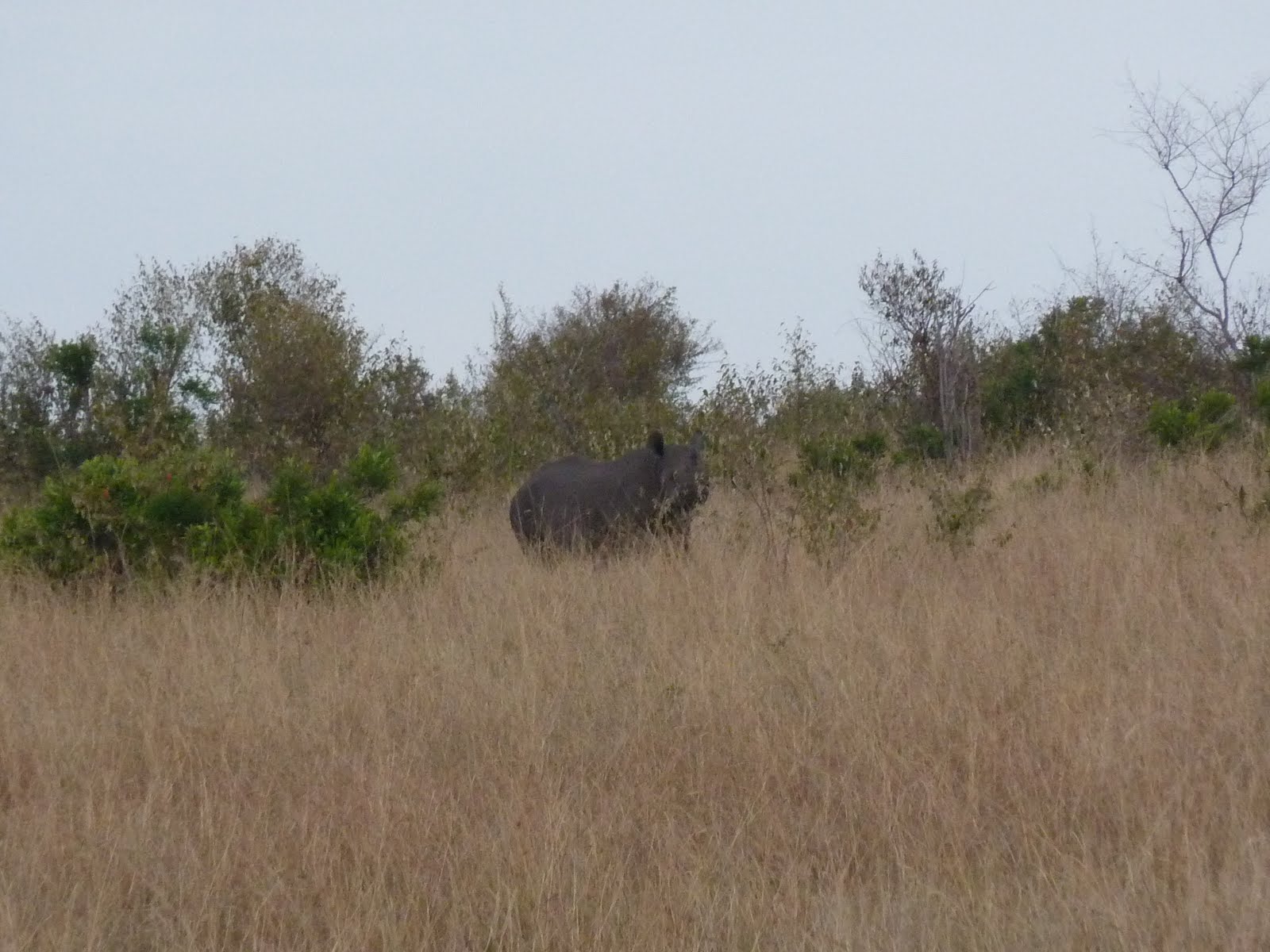
A distant shot of the Black Rhino, a rare sighting.
The water buffalo
The leopard, one of the hardest photos to get and we were lucky enough to see two.

Lori has her own opinion and I will publish her favorite photos of her favorite animals next.

Beauty for Ashes

I am still not sure what God’s plan is next in the life of the Tackett’s but the closer I get to the end of our time here, the more convinced I am that this has been both the place and the time for this journey. God has reshaped this mission trip “on the fly” from the very beginning to now and knowing my personality, this should drive me crazy. However, the Lord has given grace and each adjusted mission outreach has been used by God in ways unimaginable to us. Just like in our personal lives, the loving Father has taken what looked bad to us, such as cancelled meetings due to the referendum, rescheduled showings of the Jesus Film, and delays in construction, and turned them into incredible opportunities to teach and encourage pastors and minister to the missionaries here. I am even learning to build as we have spent a lot of time on Phase I of the Kakuyuni Technical School Project.

Bouganvilla plants along the Muthetheni Medical Clinic Compound
     It reminds me of something I have been thinking of since we first arrived in Kenya. The place has been a real paradox. Because there are no real public utilities here, everyone burns their trash, leaving a constant unmistakable scent of burning trash in the air and the regular task of whisking cinders off your clothes. At the same time, I have never been in a place of such beautiful flowers and breathtaking vistas. Every time I see the beautiful bougainvilleas or the countless hundreds of other varieties of flowers here, I am reminded that God, even in a third world country, keeps the promise of Isaiah 61:3, to give us “beauty for ashes.”
     Lori and I have experienced that heavenly exchange many times in our personal lives but never more powerfully than recent days. How about you? I would love to hear your stories of God’s grace.

One Long Day of Kenyan Ministry

Note: This is a very long post but it takes this long to tell the story….

Going on a mission trip to Africa sounds exotic and exciting and I must assure you that it has been all that and more. However, it is worth noting that in the words of Chester Vaughn, “the best laid plans of mice and men eventually devolve into work.” I thought you might like to see how a day spent in ministry unfolds. Here is an account of Saturday, August 21.

Awaken to the alarm at 6 AM. When we are not travelling far out of town, we are awakened close to 7 AM by two Ibis birds that feed in our yard and visit the bird bath in our compound. They are loud and screechy birds with black bodies and long bills and shiny green feathers on their wings. You never sleep through their wakeup call.

We are fortunate that where we stay in Nairobi has a hot water heater for the shower. It is the only place we have hot water and it is warm, not hot. One of the challenges for this wasungu (white man) is to shave in cold water at the sink. We are very spoiled, I am afraid. After a quick shower, lest the hot/warm water run out, we are ready for the day.

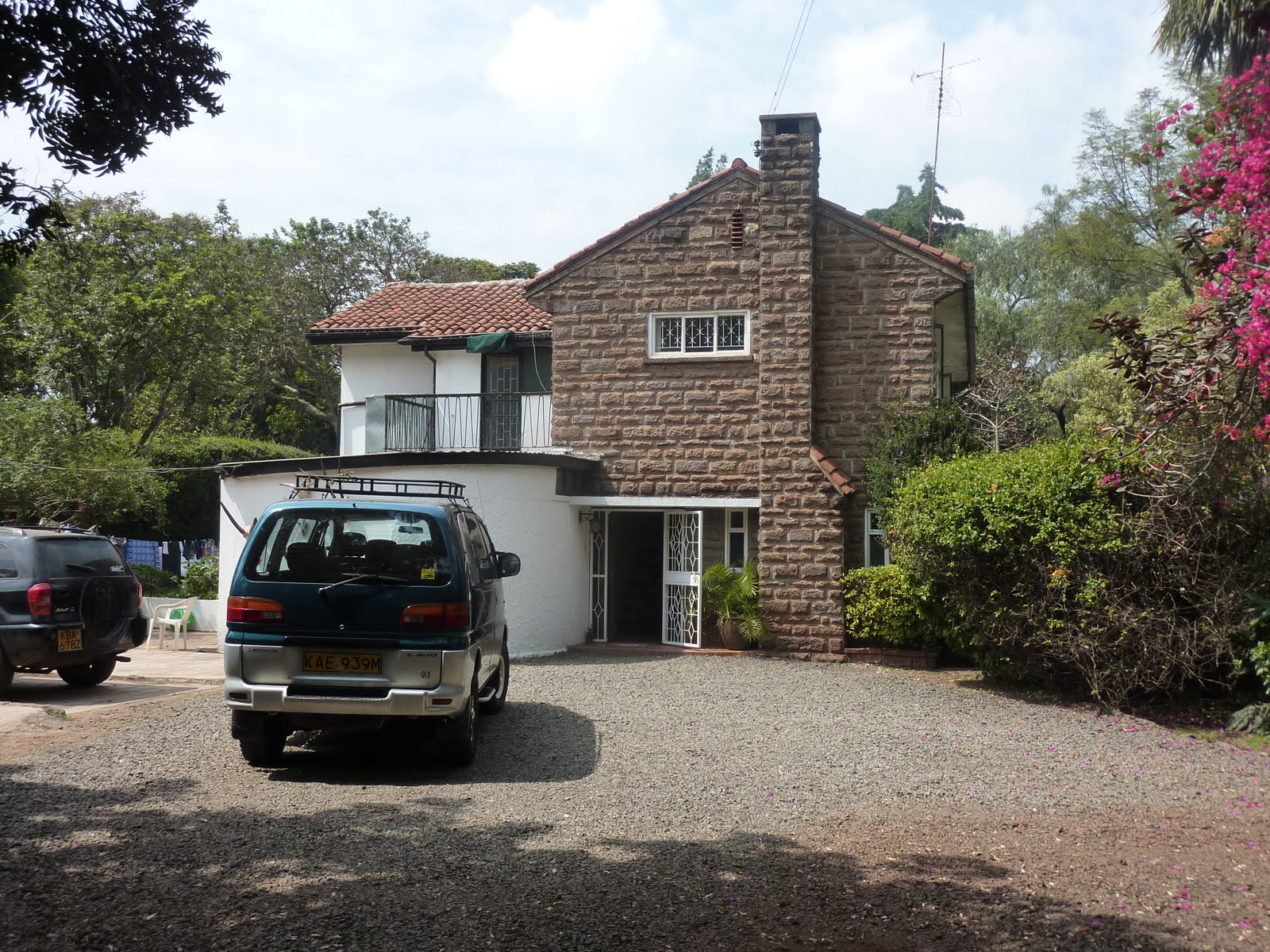
We are renting a room in a private home for the nights we are in Nairobi. We spend most of our nights here and travel each day out to the villages because the water born diseases are so prevalent down country and because so many Americans are robbed and killed in the less secure areas down country. The offset of that is that there are many car jackings in Nairobi that target expats. The average African assumes that all white people are wealthy and thus, just being white makes us a target of carjackers and thieves. For each ministry event we do, we have to decide which is the lesser of two evils. Staying down country or travelling the roads. We have been prayerful and as safe as possible.
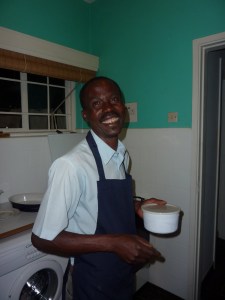
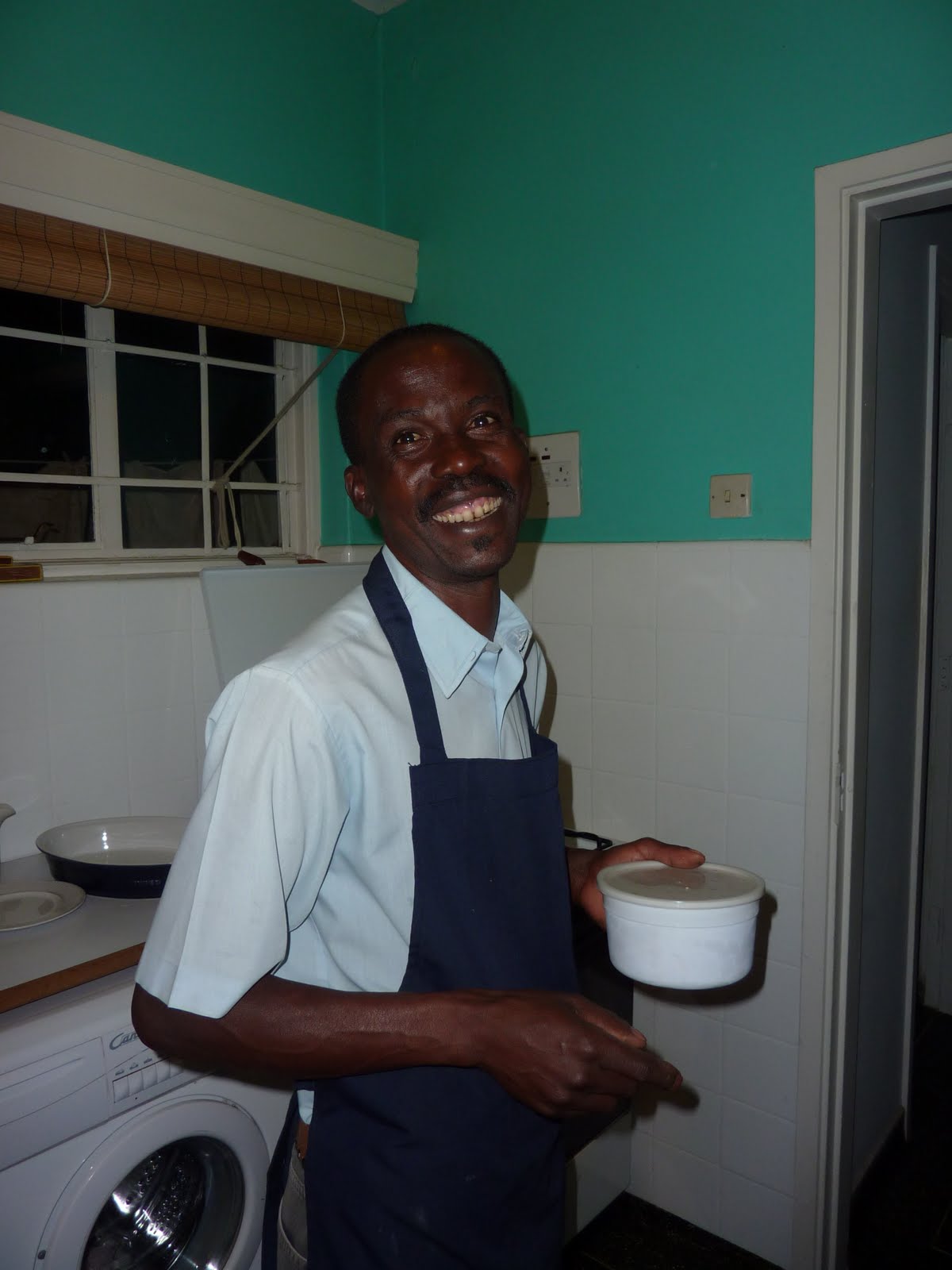
With our rented room comes Harrison, a great cook and house man. Each morning he feeds us homemade mueslix and fruit with coffee, tea, and juice. If we want, he will make eggs and toast. This day, it is mueslix, fruit, and coffee for me and Lori substitutes hot tea. Here in Kenya, if you order tea, it comes hot with milk already in it with sugar on the side. Harrison gives us a bag lunch of a ham sandwich with cucumbers, tomatoes, onion, and butter. I cannot get him to quit doing the butter thing. It is nasty and makes the sandwich soggy but it is the way it is done here. He is 45 years old, has two wives and ten children, and lives many kilometers away from his two families. It is a typical tribal African arrangement. He works in Nairobi and sends all his money home to his family. He lives in a small room in the main house.

We leave at 7:30 am enroute to Kaviani and the Springs of Faith Church. The event is scheduled to start at 10 and we are about 85 kilometers away, perhaps 50-60 miles. We stop by the Petrol Station to fill up and check the vehicle and the tires. With so many bandits on the road, you cannot afford to break down. We fill up the car, a 1994 Toyota Van with 4WD and a luggage rack. It is not very comfortable but it is very functional. The gasoline costs about $5.50 per gallon by the time you convert the liters to gallons and the shillings to dollars.

The journey takes us through Nairobi, by the airport, out the Mombasa Highway and to the left to Machakos Town. Traffic is crazy everywhere these days, but Kenya is always an adventure. Nairobi has doubled in size in the ten years with no infrastructure improvements. No one stops at stop signs or red lights. Every two lane road is used as four lanes and every four lane looks like a slow moving parking lot. They have roundabouts instead of four way stops and like in Judges, “every man does what is right in his own eyes.”

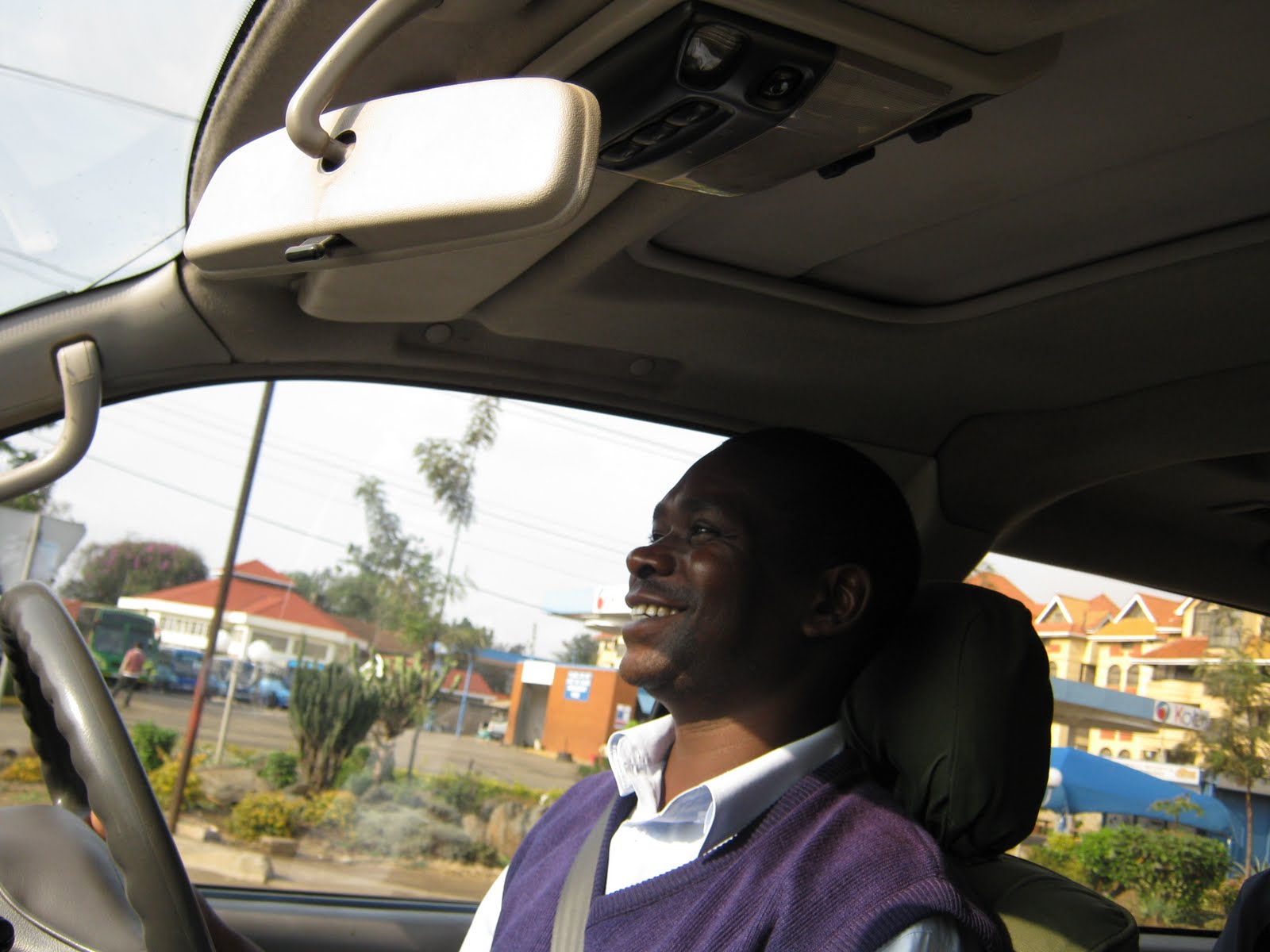
Our driver, James, also comes with the compound. He and his family (wife, Catherine, and children – Immanuel, Bradley, and Rita) live on the compound in a small cottage and he works in the yard, paying the bills, and driving and makes about $4.50 per day USD. We have been supplementing that a little by paying Catherine to do our laundry since we don’t have access to those facilities, but they manage very well and live frugally. The kids are all in school at a local school and James and Catherine live sacrificially so that can happen.

He is a very careful driver and knows the Kenyan system so we feel safe in his hands. He navigates the city this day and we get up to a reasonable speed on the highway. There are auto sized potholes that have to be avoided or navigated and the best roads here would make you write your officials in the U.S. There are several places where the roads have become so bad that people have made new dirt roads on the side. A trip that would take one hour in the U.S. will take us 3 hours today.

One of the more challenging things is the buses and Matatus, vans used as public transport. Both are often overstuffed with people and have people’s belongings stacked up to ten feet high on top of them. They are driven by maniacs. They will pass against traffic and flash their lights at you, expecting you to stop, move over, or have a headon crash with them. Every moment is a high stakes game of chicken. Every day’s paper has a story of a bus or matatu having a collision or losing control and rolling down a mountain or into a river. When it happens, the death toll is usually in the dozens. We spend a great deal of time praying during the trip.

We turn left to go to Machakos Town and the road deteriorates if that is even possible. At that turn, we pass the third mosque and at each one, we pray against the spirit of darkness as Islam tries to take over another African country. It is Ramadan here so they are making a lot of noise right now.

One of the highlights of the Saturday trip is that it is funeral day for the local village and we see several funeral processions with brightly colored dress of the tribal people. It seems ironic that in one little section of road there are about five small funeral services so as we travel it seems we are constantly seeing a funeral in progress.
When we get to Machakos, we stop at a Chemist (pharmacist) to pick up some medicine. For the most part you can get anything you want here without a prescription although it is not legal. Today, we buy more doxycyline which is used here to prevent malaria. Since we are going to spend next week in a village, we are taking it for a week to get prepared. While there, we pick up Patrick Kiseli, a longtime friend of the ministry and our translator for the day. He is an evangelist, shop owner, school teacher, etc. It takes a lot to make a living in this environment.

We stop at the Garden Hotel in Machakos for two reasons. First, our host pastor will meet us there to guide us the rest of the way. Second, it is the last “western” bathroom we will see today. It would be on your “do not stop here ever” list in the states, but here, it is five star. While there we met Bret Black, a church planter from Iowa who was working with a small church in the area.
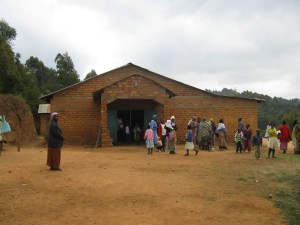
Bishop Titus arrives and leads us out of Machakos toward Kaviani. We turn left onto a tarmac road that was more dirt and potholes than paving. Fortunately, before long, we veered right onto a dirt road that took us up 15 kilometers along the side of a mountain. The views were breathtaking and so was the danger. The last two turns that took us to the church were switchback turns on less than one dirt lane. As we turned it, the van lurched sideways but we made it.

Springs of Faith is a vibrant church in the middle of NOWHERE, but the pastor has done a good job of reaching the community. He is ministering to about 300 people. I have no idea where they come from but they just materialize when church starts. We arrive at 10:30, a half hour past the announced start time. There are a handful of people there. Bishop Titus greets us and phones the pastor on his mobile. (You talk about incongruity! A mud brick church with no power and no water and we are making cell calls.) The pastor says he will come.
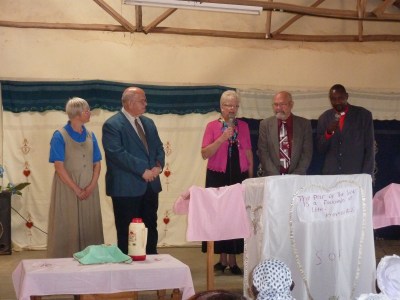
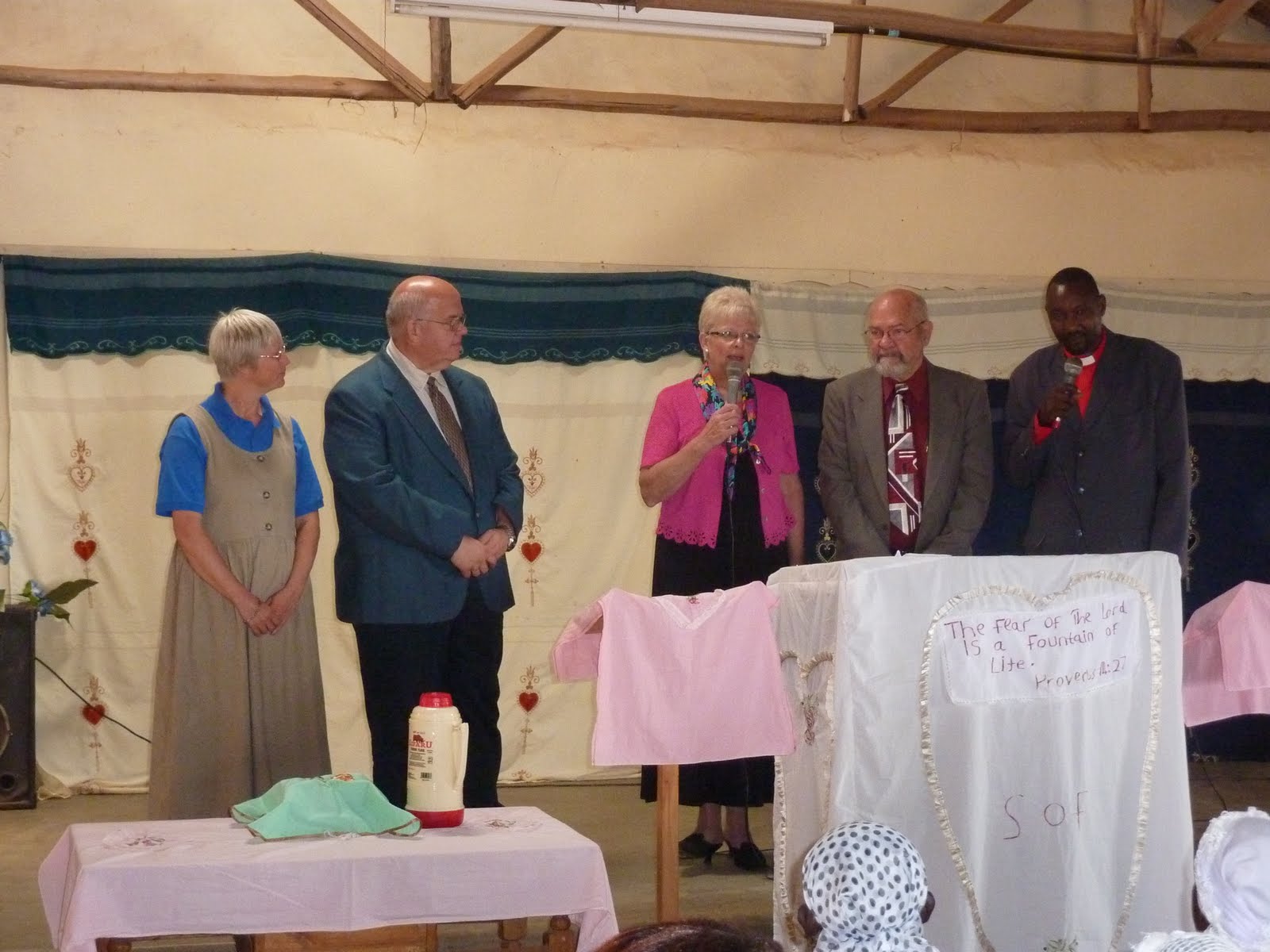
About 11:30 after everyone has visited and been greeted and worship has ramped up, we are introduced amid much fanfare. Each of us is expected to extend greetings and bring a word to the large group before we break into our session groups for the day. At 12 noon, I am released to go with the youth and Lori goes with the Sunday School children. The youth group is ages 17-30, and there are about 35 of them who come and go through the day. Lori’s classroom is the front yard and mine is the back yard.

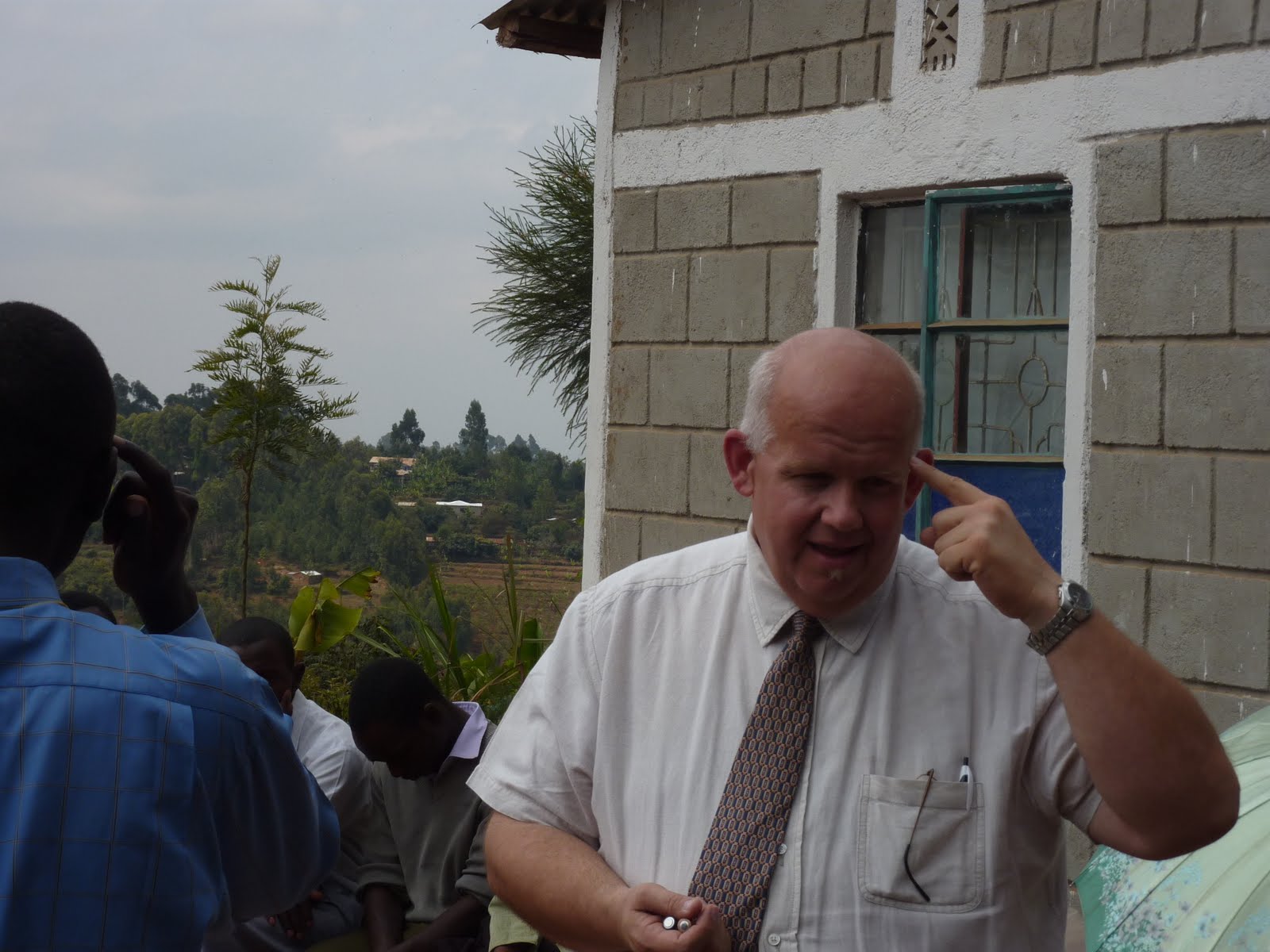
In Kenya, if you teach, you wear a tie. There I was, in the dusty back yard with young people, wearing a tie and listening to my bald head sizzle in the equatorial sun. I taught a lesson on influence that normally takes about 35 minutes but it was over an hour through an interpreter. We then took a break and allowed the youth to break into groups to form questions on the issues that face them. They gave great thought to what they wanted to discuss and took it very seriously.

It turns out their issues were very similar to youth everywhere. They asked about dating, sex before marriage, secular music, peer pressure, and more. I answered questions for nearly 2 hours and about 3:30 ended it so they could have lunch, which the church was providing. That was the schedule decided by the pastor and bishop. It would never work in America but the youth stayed with it.

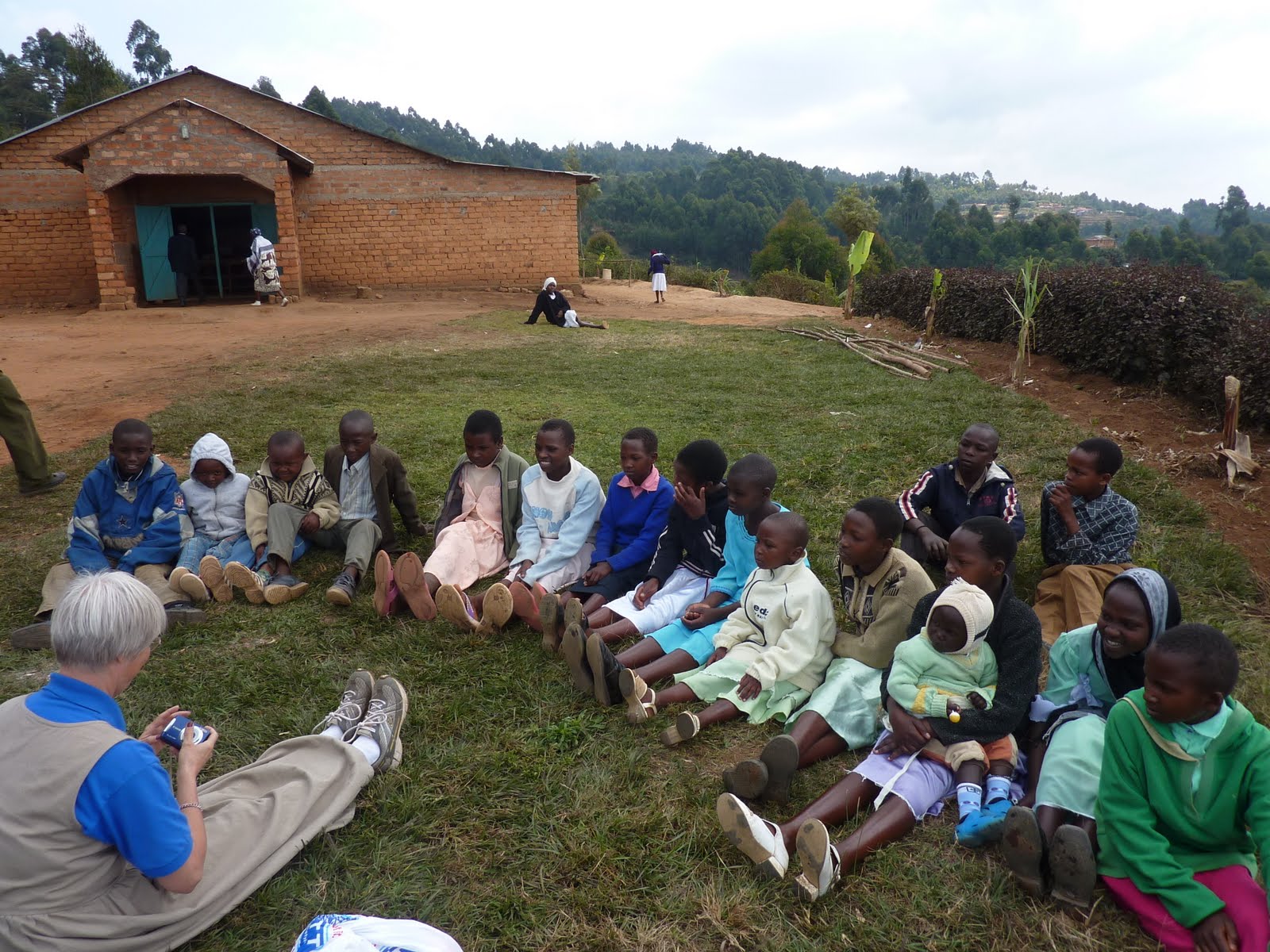
Lori had 30 or so children all day with almost no resources but she did her usual magic and the kids loved her. She had a translator named Christen who did a great job. The kids drew pictures, played ball, listened to Bible stories, and just hung out together.

At the same time, Ric and Jane Taylor were teaching a mini marriage conference to the adults. For all three groups, you have to keep it very simple. You cannot assume they know anything. They are hungry but very few own a Bible and even fewer still are literate enough to understand what they read. The ones that can read and write record everything you say in a small notebook we give them and they spend weeks afterward discussing what you said in their group meetings. It is an awesome responsibility to teach in a society dominated by oral traditions.

At 4:30, we load the van and leave. The children were unsupervised and uninhibited and it gave us a near heart attack as they chased the van and got dangerously close. At one point a seven or eight year old boy, jumped on the bumper and held on and we had to stop and force him to get off. Of course, most had never seen a white man and they see maybe 2-3 cars a month so they have no reference for it being dangerous.

The trip home involved dropping Patrick to take one of the dreaded matatus home and a stop at a soda stand to buy a “black currant” or grape soda. As always, there is no refrigeration so we drank it warm with our sandwiches Harrison made. By then it was five and we were hungry so the warm soda and soggy sandwich were wonderful.

The trip in to Nairobi was blessedly uneventful but we cut it a bit close. It was nearly dark by the time we got into Nairobi and that is not good. Along the way, we saw zebras and wildebeests on the side of the road. On that stretch so far this month, we have seen giraffes near the airport and a herd of camels. I don’t think camels are indigenous but someone out there is raising them.

Just a few blocks from the compound, we witnessed a bicycle courier have a bad wreck coming down a hill. He wiped out and slid several feet in the direction of an oncoming bus. He rolled away at just the last minute. Had it happened a few seconds later either the bus or our van would have hit him.

We arrived back at the compound where Timothy, the night guard, met us with a smile and said welcome home! We exited the van in time for Harrison to feed us dinner of stuffed pork loin and applesauce about 8 PM. After dinner, we adjourn to bed, and set the alarm for 6 AM again so we can do it all over again on Sunday. Before we can call it a day however, we must perform the nightly security ritual. When the Taylors leave for their cottage, I open the front door and check in with Timothy. I then pull a steel gate over the front door and put a heavy padlock on it. I close the interior door and deadbolt it. Lori and I move up the stairs and I pull a steel gate over the top of the stairs and attach a large steel padlock and hide the key. We enter our bedroom and lock the door with a skeleton key. Before going to bed we locate the panic button which will summon private security and a swat team if pressed. We feel the protection of God but Nairobi is still a very dangerous place for expats.

As you can see, it takes all day to do four hours of ministry but it is worth it. Thank you for your prayers.

How much "trouble" am I to God?

Lori’s “God Moment” today involved this guy. She loves
birds and this eagle landed right outside our window as
we had breakfast in Nairobi.

I have been amazed over the years at how different books, music, and websites speak to me at different times in life. I know you have experienced this as you read a Bible verse that you had seen many times, but on a particular day it seemed as if it were a specific word from God for the particular moment in which you found yourself. I have kind of gotten used to that – after all, we know the Bible is a living book. It is the other things that make me wonder how much planning and directing God had to do to be sure I saw or heard the right thing at the right time.

I am continually amazed when a classic devotional book written a hundred years ago, such as My Utmost for His Highest, can speak so pointedly and specifically to a need as current as today. Often a song does the same thing. Whether it is a 250 year old hymn or a five year old chorus, it seems that just when I need it, it appears on the radio or on Itunes. I may have heard it a million times and yet, it had never spoken so clearly as it does when I am in the crucible of need.

Just before I left the United States for Malawi and Kenya, an old and dear friend wrote me a long letter. I was busy that day and didn’t read it. I got in a hurry to leave and stuffed it into my backpack to read on the plane. That was six weeks ago. I had taken it out a few times to read it in the evenings but the small print and low light in Africa would not allow me to see it. This morning, it fell out of my bag as I reached for my Bible. I took it out into the sun and read it and it was a word of encouragement and affirmation at a time when I am weary from the work here in Africa. How much trouble did God have to go to in order to have her write those words in advance and me read it at just the right time?

On a purely theological level, I know He is God and it is no trouble to him, but on a practical level, it reminds me of Psalm 139:17-“How precious to me are your thoughts, O God! How vast is the sum of them!” I thank God that He thinks of me and goes to whatever trouble is necessary to meet my every need.

Do you have a God story of one of those “right on time” words? I would sure love to hear it! Tell us about it.

The Incongruities of Africa

There are so many inconsistencies around me in Kenya that almost defy explanation. Some are so simple as to be laughable and others have eternal consequences. For instance, I am writing this post at the Java House. It is an internet café with exceptionally good coffee, beautiful outdoor gardens, and food like you would find at any mall in America. Yet, I am sitting here today with three day’s growth of beard and desperately in need of a shower because of a water shortage in Nairobi coupled with a small water leak near our compound. I can get a world class cup of coffee but not enough water to drink or flush the toilet.

Another of the crazy inconsistencies is the ugliness of poverty, slums, and dirt everywhere but some of the most beautiful flowers I have ever seen and they are everywhere!


Another incongruity is the proliferation of cell phones or mobiles as they are called here. Almost everyone has a mobile though no one has a monthly plan. They buy cell phones on the used market for about $25 USD and a sim card for $5 USD. Then, when they can afford it, they buy a “top up” card for whatever amount of Kenya Shillings they can afford, usually on scratch cards ranging from 25 KS to 1000 KS. Today’s rate of exchange is about 78 shillings to the dollar. Because in country text messaging is free, even the homeless and the unemployed walk around with the mobile in hand. Yesterday, we drove over rutted mountain red clay roads for miles into the hinterlands. Yet, even there you see the ever present cell phone towers.


The list could go on and on, but the most disturbing incongruity is this. Nairobi, Kenya, has been the launching pad for western missions into sub-Saharan Africa for over a century and there are thousands of churches and a claim by even the government to be a Christian nation. However, due to churches teaching a mixture of spiritism, Christianity, tribalism, and prosperity doctrine., there is still a proliferation of polygamy, abuse, female circumcision, slavery, witchcraft, poverty, and corruption.


Kenya needs the prayers and the discipleship of God’s people. It is not enough to go preach a crusade and plant a church. They are in desperate need of theological training and practical Christianity and old-fashioned discipleship. Come to think of it, that sounds a lot like another land of incongruities – the United States. Hmmmm!