• Recent Sermons

    Click for recent sermon audio.

  • Latest Tweets

  • Follow me on Twitter
  • Facebook

Attack of the Mad Ducks

Lori and I are trying desperately to maintain a healthy lifestyle in spite of an incredibly busy schedule lately. (I know, enough whining! Everybody is busy, right?) Our normal routine is to walk 2-3 miles each morning before we start our day. Because I get bored easily, we tend to rotate the places we walk. Recently, we were walking around Willow Springs Park  near our home when a very irritated pair of ducks began to squawk at us and in general just made a nuisance of themselves. I attempted to shoo them off with the usual “I’m bigger than you” routine but they were pretty insistent. Lori and I decided there must be a nest of ducklings nearby and went on our way. On the next lap around the park, they were more aggressive and I had to valiantly defend my bride. On the third trip by they were waiting on us. They had the path blocked at its most narrow point. We decided to change directions. (Although, I think I could have taken them!)

I spend most of my time helping churches think about change, and this little encounter reminded me of some key lessons in fighting battles of change:

  1. We often misunderstand how invested people are in their stuff. These ducks had no idea I wasn’t planning to harm their babies, but it didn’t matter. They were taking no chances. In church world, people often keep a suspicious eye on a new or transitional leader even though that leader wants what is best, because they value their organization, or their plan, or their way of doing things as much as the ducks value their nest. Before you try to make a significant change, be sure you know who is invested and how deeply!
  2. People like ducks often act on instinct. The ducks were just doing what they thought was best. Something big was approaching their baby. Essentially, their internal computer was giving bad information. People often get bad info from their internal computer (instinct). Something tells them you are attacking them personally. They have “the feeling” you are messing up. They get a vibe that you have a hidden agenda. Understanding that they don’t understand will help you keep your cool and not compound the issue.
  3. We need to choose our battles. When we made the third lap and our pathway was blocked, I saw no need to have a confrontation with an angry mama duck who was just doing what was instinctive. There was more than one pathway so there was no need to prove I could beat up a duck. There are some battles that are worth fighting and there is only one way to get there. In that case, do what is necessary while keeping a Christ honoring attitude. However, if there is another way to accomplish the goal, we are wise to consider it.

Leadership Mistakes on the Pathway to Change

I resemble that remark! Having strung together a series of small wins as transitional pastor, I attempted a major change in a 136 year old church and was reminded that you can never cut corners.

We are experimenting with giving up traditional Sunday night service in favor of outreach to young families through AWANA . (I probably wouldn’t have chosen this approach but they already had AWANA and when I arrived, it was one of the few remaining public interfaces.) I fumbled the process on the front end but with grace and humility recovered fairly quickly. In the process, I learned or re-learned some of the mistakes leaders may make in effecting major change. This is not an exhaustive list, but reflects some of what we encountered making changes in the real world.

  • Lack of clear direction – On the front end, I was not as convinced or convincing as I need to be. When the leader is not clear and passionate about change, even those who are prone to follow him are left with questions. The leader can never afford to be unsure of where he is leading.
  • Lack of clear reasoning – Most difficult to understand was why this was better than asking the AWANA leaders and others to come on a different night to do this outreach. Both the area I am serving and the age of our congregation meant our people didn’t understand the culture of unchurched young families. They had to be given time to understand the “why.”
  • Lack of clear definition – Late adopters and even opposers need to know what it means to them. For the oldest members of our church who are unable to help with AWANA or the outreach to their families, they needed to know what it meant to them. The fix was as simple as providing a Bible study and enlisting them to pray for the AWANA ministry that was going on upstairs.
We launched last Sunday night with a 50% increase in children and students involved in AWANA with greeters, van drivers, listeners, and leaders who previously were in evening worship. The symbolism of the pastor and staff being involved in AWANA instead of in a worship service was powerful, but it almost didn’t happen because I did not communicate effectively.
Hopefully, the mistakes I make next time will be new ones, instead of repeating these. If you have led or are leading a small traditional church through change, I would love for you to add to this list.

“Out with the Old; In with the New”

I was in a transition team meeting with the church I am serving and the lengthy discussion was around our specific assignment from God in the community – our purpose, if you will. There was much discussion of previous wordings used by the church and her pastors and several times, both older and younger people suggested it was time to freshen and update not only the focus but also the wording. A phrase that was bandied about in a tongue-in-cheek sort of way was “out with the old and in with the new.”

I appreciate the sentiment and believe in change and adaptation to the culture as much as anyone. In fact, I have often been too quick to change, sometimes just because I was bored with the status quo, not because it needed to be changed. I am reminded of that every time I walk out of our offices and past this little section of landscaping.

All winter long, I passed this area and noticed amongst the ground cover (I have no idea what this evergreen stuff is called.) shoots of plants springing up. Each time, I thought to myself, I need to make some time to pull those weeds before they take over the whole bed. I even had a couple of times where I thought, “Why doesn’t someone on the grounds team or the custodian take care of this?” I got busy and never got a “roundtoit.”

Fast forward to spring. It turns out those weeds were tiger lilies and hasta. It is a good thing I didn’t find time to pull them.  Don’t laugh. I never claimed to have a green thumb.

Sometimes when organizations and processes are struggling, we think “out with the old and in with the new.” Pull it up and throw it away. Not everything that is old needs to be pulled up and thrown away, though. There are some processes and programs that need to be thrown away for sure. Others needs to be freshened up, fertilized, and pruned. Some just need to be left alone to get healthy again. The real success for a leader is knowing which ones need each of those responses. I am working on being better at that.

Little Ceasar’s or Office Depot?

Pop Quiz: Who has the better customer service, Little Caesar’s or Office Depot? Crazy question, right? I always thought of Office Depot as a fairly professional organization and Little Caesar’s as a cut-rate, you-get-what-you-pay-for kind of wasteland. Last week, I ran an errand for my assistant and stopped by Office Depot to pick up several fairly common items. One item was hard to find so I wandered up to a lady who was deeply engrossed in a conversation with a friend and stood there waiting for help. I kept edging closer into their personal space to get noticed and after several awkward (for me) minutes, said “excuse me” and walked between them. At no time did she ask if I needed anything. I went to the lady behind the counter in the print shop and asked her if she knew where they were. She pointed to an area they “might be” but at least it was more helpful than the first lady. I went to the “ink” desk and she pointed to an aisle number toward the back corner of the store. Again, I had no luck. Ever the optimist, I found two men on the opposite side of the store and asked them. To his credit, one suggested an end cap on the main aisle, but was too busy to assist me. The other said he did not think they carried them. Finally, I gave in, swallowed my male pride, and called my assistant. She told me exactly where they were and I made my purchase. What was the elusive item in this office supply place? Blank index cards.

The following weekend, my wife was sick so I ran to Little Ceasars’s for a couple of  “hot-n-ready” $5 pizzas. I went in and it turns out the pizza was not quite hot-n-ready. The meat pizza was there but I had to wait on the cheese pizza. I sat down to wait and the manager made small talk and checked on me a couple of times between customers. When the cheese came out, I went to get it and he said he had also made a fresh meat pizza since I had to wait. He also threw in some breadsticks for free. Truthfully, the pizza was better than I remembered it being since it had been years since I had eaten Little Caesar’s. More importantly, I left feeling good about the whole experience.

Now, here is the result of these encounters. I was not a fan of Little Caesar’s and they exceeded my expectations and I was a fan of Office Depot and they really fell short of my expectations. If you have read this far, stay with me a little longer because here are my takeaways for those of us in church world:

  • You are only as good as your latest interaction with people. You always have to be working on customer service.
  • You are only as bad as your latest interaction with people. It is never too late to become good at customer service.
  • The best customer service is the kind that says, “let me show you,” or “let me fix this for you.”
  • People that come to our church, especially guests, are our customers and we are in the business of customer service.

I would love to hear from you about how small churches are doing customer service right.

Disclaimer: I have had many good customer service experiences with Office Depot and anyone is entitled to a bad day once in a while, so I will go back. However, in today’s competitive world, there are those who would not. Churches should take heed.

First Downs and Field Position

I spent a little time last weekend with one of those kids who every pastor/student minister knows. The one that no matter how hard you try, doesn’t get it. The one that avoids you like the plague. The one that seems to go out of his way to let you know he is cool and you are not. That was Colin. Now, he is an adult in his late 20’s and he never misses a chance in writing, in person, or on Facebook to tell me how powerfully I impacted his life. Fast forward to yesterday. I had coffee with a former student I have not seen but one time in ten years. She is planning to get married and wants me to officiate. It was a great conversation. I was so proud of her and the strong woman she had become.

As we finished up, she told me the phrase that I used back then that had most influenced her life. It was a statement I used often in student ministry. It was, “God is more interested in first downs than field position.” In other words, making progress in the spiritual journey is much more significant than how spiritual you look.

Honestly, it has been a pretty lousy week in Kingdom work. Nothing serious is wrong but I have just been out of sync. I am talking and I am pretty sure God is listening but not much communication is happening. There doesn’t seem to be much “fruit” or lasting impact the last few days.

It is just like God to speak in such a clear and unmistakable way that even I cannot miss it. Here I am ten years later, looking at two young adults, both of whom are living proof that all of us are a work in progress and that God never gives up on us. Both of them have significantly moved the chains in the years since I was interacting with them. It just reminds me that results don’t always look the same to him as they do to us. He takes a much longer view, sometimes, even an eternal view.

So, I am going to just keep on doing what He tells me to do and saying what He tells me to say, and trust Him to keep moving the chains in the lives of those He entrusts to me for a little while. What is your perspective? Do you value the first downs in your life or are you frustrated by your field position? Maybe a little perspective will help.

Lord, Give Me Back My Hair!

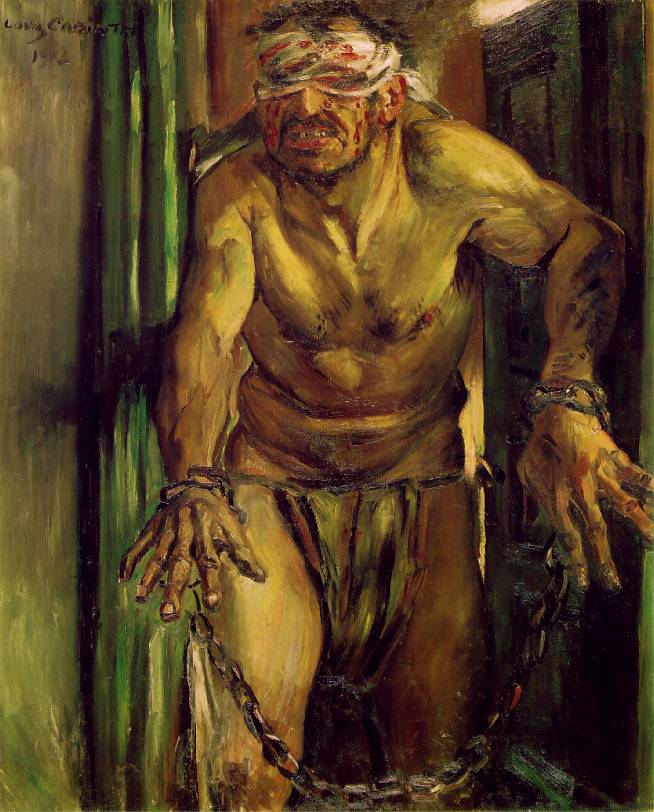
     Samson was a Biblical figure that in spite of his womanizing and moral flaws, God used to accomplish his purposes. You probably remember the most famous episode in his storied life when he fell in love with a foreign woman whom God had expressly forbade him to marry. Like most men, Samson let his libido do the talking instead of his spirit and found himself again and again betrayed by this woman who supposedly loved him. One of my all-time favorite preacher quotes was when a friend said of Samson, “If you wake up blind, naked, and grinding somebody else’s corn, you might need to reconsider who you are partying with.”

     What makes Samson unique is that even after abysmal failure and seemingly with nothing left to offer, he made the most of his situation. You may remember the secret of his strength was in his hair and when his woman, Delilah, finally deluded the big lug into telling her that, she cut it off and he was just a normal man. Now, brought to the stadium where the Philistines would make fun of the once powerful warrior before putting him to death, he cries out to God. He rubs his head and feels the hair has begun to grow back and cries out to the Lord, “Once more, Lord, give me back my strength!” He then asks to have both hands put on the  pillars of the stadium and with renewed strength, pushes them down, killing more of the enemy at one time than any previous event in his warrior life.

     Yesterday, over lunch with an old friend, I reflected on my life. There have been two major movements in my life, both of which were amazingly blessed by God. I spent 17 years leading a network of youth ministers and local churches in East Tennessee and later spent 10 years as part of the leadership of a great church in Middle Tennessee. I am proud of what God has done in both of those things after I left, even though leaving the second was not a choice I would have made and quite honestly, I messed up. I am grateful for the part God let me play in both of those.

     Now, that I am nearing 50, I am asking God to show me the next great movement. I believe I have one more season like that left in me. I am not sure whether it will be as pastor of a local church, working with a parachurch group, or what, but I am asking God to “give me back my hair” for one more great push. If He can do that for Samson, He can surely do it for me!

     What about you? Are you in one of those great movements or are you looking ahead for God’s next great movement in your life?

The Whole World is Mad!

     My missionary friend, Ric, is prone to say “the whole world is mad,” in response to some lunacy he sees on the news. He usually goes on to say it is just a matter of degrees. Some places and people are more mad than others. I stumbled into a hornets nest of madness yesterday. It was a simple task. I had to call the newspaper to renew an ad for a house we are selling in Columbia, Tennessee. (Shameless plug – If you know someone who needs a good deal on a great house, send them to this site.) Because of the unique response we are getting to our house, I wanted to add the words, “ideal for extended families” to the ad. The sweet lady on the phone said and I quote, “O, we can’t do that. HUD (Department of Housing and Urban Development) prohibits that as it may be construed to be discrimination.”

     So, the whole world is mad. Those lunatics from Westboro Baptist Church (though they are not Baptist like anyone I know, but I digress) can stand on the corner and traumatize families of fallen American heroes but I cannot appeal to those who might have their parents to care for in an attempt to meet a need for both of us. Apparently, to appeal to extended families is an affront and discriminates against those who are not in traditional family models. Wow!

     Does this strike you as being mad? Maybe I am just missing something here. What do you think?

That’s What You Signed Up For

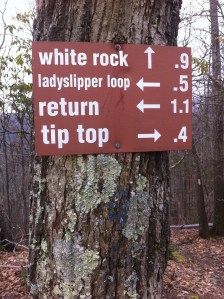
     Leadership is not always fun and certainly is not always glamorous. I was reminded of that the other day when Lori and I decided to hike in Buffalo Mountain Park near our temporary home in Johnson City, Tennessee. Here is how the conversation went after a rest break about half way up the mountain trail:

Me: Go ahead, ladies first.

Lori: No, you can lead.

Me: I don’t really want to lead anymore.

Lori: Tough, that is wha you signed up for!

     Whatever your position of leadership, whether it is in business, in church, or in your home, there is never a day off. You may get tired, you may feel confused, and you may even get a little panicky, but you are still the leader. After all, that is what you signed up for. The problem it seems, is that almost everywhere you turn, someone is deciding they don’t care what they signed up for – they are going to quit. You see Dads abandoning their families, pastors leaving churches, and in many cases, people who still occupy the leadership position just not leading. They have forgotten what they signed up for.

     Yesterday, a man and his wife who are 79 and 71 respectively, spoke in our church about their continuing work in Kenya, East Africa. They talked a lot about a lot of different things, but there were two things they said that empowers us to do what we signed up for. Both are rooted in the reality that it is God who strengthens us to do the things that He called us to do and the things to which we said, “yes.” Here are their axioms.

  • We just have to be FAT people – Faithful, Available, and Teachable.
  • We just show up, and God does the rest.

     That is what leaders do. They remember what they signed up for and they show up each day with a FAT attitude and trust God to do the rest. Lead On!

Axiom – Call a Fumble a Fumble

Some years ago, I read a book by Bill Hybels in which he speaks to leaders about those decision-making tools that are woven into your psyche so completely that you do not have to think about some things. Those decisions are already made. He said in this book that these tools are axioms and it does you well occasionally to try to put them into words to remind yourself why you do what you do. One of my favorite examples of the fifty or so he wrote about is that you “have to call a foul occasionally.” In other words, if someone gets out of line, it is the role of the leader to gracefully call him down.

In recent days, I have become aware that I have an axiom of my own that is similar and seems to work for me. My axiom is that you “have to call a fumble, a fumble.” In other words, when you or someone else does something wrong, sinful, or foolish, just gracefully admit it, correct it as much as possible, and move on. In football, you never see a team who fumbles the ball denying it was a fumble, ignoring the ball and hoping it goes away, or point to someone else and say “he caused me to fumble.”  No. What they do is scramble to recover it. In other words, they attempt to correct the mistake.

A few weeks ago, I attempted to help a church I am leading adopt a budget and offered some parliamentary procedure advice that when I got home, I just realized was wrong. Fortunately, at the prompting of the Spirit, I reversed course at the meeting and we didn’t make the mistake. However, the next time we had a business meeting, I had to tell them I was wrong previously so they would not remember that and assume it was okay in the future.

As I lead and consult with churches in crisis, I am becoming more and more aware that one of the hardest jobs for gatekeepers is to call a fumble, a fumble. Everyone in the organization may know that it happened and it did not go well, but we rarely admit and attempt to correct it, especially in churches. We just tend to ignore it and resolve to do better next time. Yet, I am convinced that not calling a fumble, a fumble and letting it sit there for everyone to walk around and wonder about for years to come is the reason many churches never get over difficult times.

What about you? Do you have some axioms you think are worth sharing with others?

No Left Turns

Some things that float endlessly around the internet in email format are worth reading. This is one of them. It is a wonderful piece by Michael Gartner, editor of newspapers large and small and President of NBC News.  In 1997, he won the Pulitzer Prize for editorial writing.  It is well worth reading, and a few chuckles are guaranteed. 
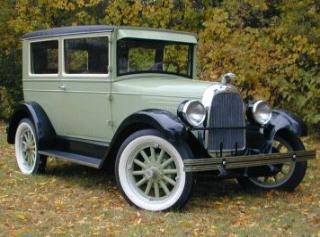
My father never drove a car.  Well, that’s not quite right.  I should say I never saw him drive a car.  He quit driving in 1927, when he was 25 years old, and the last car he drove was a 1926 Whippet.

“In those days,” he told me when he was in his 90s, “to drive a car you had to do things with your hands, and do things with your feet, and look every which way, and I decided you could walk through life and enjoy it or drive through life and miss it.”

At which point my mother, a sometimes salty Irishwoman, chimed in.  “Oh, bull—-!” she said.  “He hit a horse.”

“Well,” my father said, “there was that, too.”

So my brother and I grew up in a household without a car.  The neighbors all had cars — the Kollingses next door had a green 1941 Dodge, the VanLaninghams across the street a gray 1936 Plymouth, the Hopsons two doors down a black 1941 Ford — but we had none.

My father, a newspaperman in Des Moines, would take the streetcar to work and, often as not, walk the three miles home.  If he took the streetcar home, my mother and brother and I would walk the three blocks to the streetcar stop, meet him, and walk home together.

My brother David was born in 1935, and I was born in 1938, and sometimes, at dinner, we’d ask how come all the neighbors had cars but we had none.  “No one in the family drives,” my mother would explain, and that was that.

But sometimes my father would say,  “But as soon as one of you boys turns 16, we’ll get one.”  It was as if he wasn’t sure which one of us would turn 16 first.

But, sure enough, my brother turned 16 before I did, so in 1951 my parents bought a used 1950 Chevrolet from a friend who ran the parts department at a Chevy dealership downtown.  It was a four-door white model, stick shift, fender skirts, loaded with everything, and, since my parents didn’t drive, it more or less became my brother’s car.

Having a car but not being able to drive didn’t bother my father but it didn’t make sense to my mother.

So in 1952, when she was 43 years old, she asked a friend to teach her to drive.  She learned in a nearby cemetery, the place where I learned to drive the following year and where, a generation later, I took my two sons to practice driving.  The cemetery probably was my father’s idea.  “Who can your mother hurt in the cemetery?” I remember him saying more than once.

For the next 45 years or so, until she was 90, my mother was the driver in the family.  Neither she nor my father had any sense of direction, but he loaded up on maps — though they seldom left the city limits — and appointed himself navigator.  It seemed to work.

Still, they both continued to walk a lot. 

My mother was a devout Catholic and my father an equally devout agnostic, an arrangement that didn’t seem to bother either of them through their 75 years of marriage.  (Yes, 75 years, and they were deeply in love the entire time.)  He retired when he was 70, and nearly every morning for the next 20 years or so, he would walk with her the mile to St. Augustin’s Church.  She would walk down and sit in the front pew and he would wait in the back until he saw which of the parish’s two priests was on duty that morning.  If it was the pastor, my father then would go out and take a two mile walk, meeting my mother at the end of the service and walking her home.  If it was the assistant pastor, he’d take just a one mile walk and then head back to the church.  He called the priests “Father Fast” and “Father Slow.”

After he retired, my father almost always accompanied my mother whenever she drove anywhere, even if he had no reason to go along..  If she were going to the beauty parlor, he’d sit in the car and read, or go take a stroll, or, if it was summer, have her keep the engine running so he could listen to the Cubs game on the radio.  In the evening, then, when I’d stop by, he’d explain:  “The Cubs lost again.  The millionaire on second base made a bad throw to the millionaire on first base, so the multimillionaire on third base scored..”

If she were going to the grocery store, he would go along to carry the bags out — and to make sure she loaded up on ice cream. As I said, he was always the navigator, and once, when he was 95 and she was 88 and still driving, he said to me, “Do you want to know the secret of a long life?”

“I guess so,” I said, knowing it probably would be something bizarre.

“No left turns,” he said.

“What?” I asked.

“No left turns,” he repeated.  “Several years ago, your mother and I read an article that said most accidents that old people are in happen when they turn left in front of oncoming traffic.  As you get older, your eyesight worsens, and you can lose your depth perception, it said.  So your mother and I decided never again to make a left turn.”

“What?” I said again.

“No left turns,” he said.  “Think about it…  Three rights are the same as a left, and that’s a lot safer.  So we always make three rights..”

“You’re kidding!” I said, and I turned to my mother for support.

“No,” she said, “your father is right.  We make three rights.  It works.”  But then she added, “Except when your father loses count.”

I was driving at the time and I almost drove off the road as I started laughing.

“Loses count?” I asked.

“Yes,” my father admitted, “that sometimes happens.  But it’s not a problem.  You just make seven rights and you’re okay again.”

I couldn’t resist.  “Do you ever go for eleven?” I asked.

“No,” he said.  “If we miss it at seven, we just come home and call it a bad day.  Besides, nothing in life is so important it can’t be put off another day or another week.”

My mother was never in an accident, but one evening she handed me her car keys and said she had decided to quit driving.  That was in 1999, when she was 90. 

She lived four more years, until 2003.  My father died the next year, at 102..  They both died in the bungalow they had moved into in 1937 and bought a few years later for $3,000.  (Sixty years later, my brother and I paid $8,000 to have a shower put in the tiny bathroom — the house had never had one.  My father would have died then and there if he knew the shower cost nearly three times what he paid for the house.)

He continued to walk daily — he had me get him a treadmill when he was 101 because he was afraid he’d fall on the icy sidewalks but wanted to keep exercising — and he was of sound mind and sound body until the moment he died.

One September afternoon in 2004, he and my son went with me when I had to give a talk in a neighboring town, and it was clear to all three of us that he was wearing out, though we had the usual wide-ranging conversation about politics and newspapers and things in the news.

A few weeks earlier, he had told my son, “You know, Mike, the first hundred years are a lot easier than the second hundred.”  At one point in our drive that Saturday, he said, “You know, I’m probably not going to live much longer.”

“You’re probably right,” I said.

“Why would you say that?” he countered, somewhat irritated.

“Because you’re 102 years old,” I said.

“Yes,” he said, “you’re right.”  He stayed in bed all the next day.

That night, I suggested to my son and daughter that we sit up with him through the night.  He appreciated it, he said, though at one point, apparently seeing us look gloomy, he said, “I would like to make an announcement.  No one in this room is dead yet!”

An hour or so later, he spoke his last words.  “I want you to know,” he said, clearly and lucidly, “that I am in no pain.  I am very comfortable.  And I have had as happy a life as anyone on this earth could ever have.”

A short time later, he died.

I miss him a lot, and I think about him a lot.  I’ve wondered now and then how it was that my family and I were so lucky that he lived so long.

I can’t figure out if it was because he walked through life or because he quit taking left turns.

Life is too short to wake up with regrets,

So love the people who treat you right.  

Forget about the ones who don’t.  

Believe everything happens for a reason.  

If you get a chance, take it, and if it changes your life, let it.

Nobody said life would be easy — they just promised it would most likely be worth it.

ENJOY LIFE NOW – IT HAS AN EXPIRATION DATE !